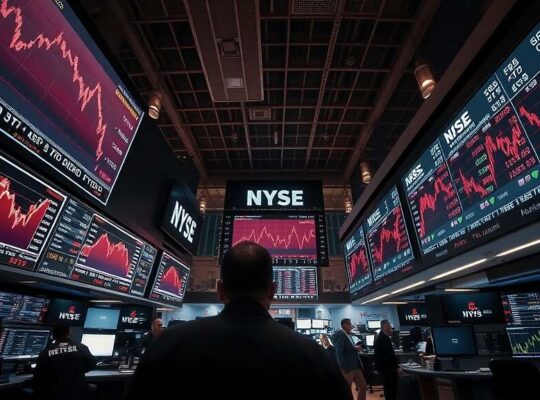


The Dax saw a significant increase on Wednesday, closing the trading session on Xetra at 26,438 points, marking a 2.2% gain compared to the previous day’s close. Throughout the day, the index built on its gains.
Andreas Lipkow, Chief Market Analyst at CMC Markets, commented that the significant jump above the 26,000-point mark greatly increases the chances of a year-end rally. He noted that after weeks dominated by inflation concerns, rising bond yields, and geopolitical uncertainty, investors seem ready to assume greater risks following the US midterms.
According to the analyst, which had initially caused considerable uncertainty, market sentiment is now being assessed more nuancedly. He suggested that shifts in political power dynamics could impose greater discipline on US fiscal policy, potentially easing some of the worries surrounding ballooning national debt and high long-term bond yields.
Lipkow also pointed to potential changes in the Middle East, stating that investors are banking on political conditions evolving to improve the prospects of conflict de-escalation. Furthermore, sustainably falling energy prices would not only ease inflationary pressure but also boost profit outlooks for many companies. He added that this outcome would provide central banks with more monetary policy freedom, calling the combination of reduced cost pressure and lower interest rate risk particularly favorable for stock markets.
Investor confidence was also bolstered by several strong quarterly results within the Dax. Lipkow highlighted that the results from Heidelberg Materials, Scout24, and Continental generated buying interest, demonstrating that German companies can deliver positive surprises despite the challenging economic environment.
The German Purchasing Managers’ Index continues to signal growth, supporting the hope for a broad economic recovery. The analyst explained that even high energy prices have not managed to significantly curb this development so far. Increasingly, investors believe that the German economy will regain greater momentum in the coming year, suggesting that the market is already pricing in an expected upswing for 2027.
Finally, notable sector rotation was observed. While highly valued technology and AI stocks corrected significantly, other sectors largely absorbed these losses in the broader market, which helped establish the upward trend on a wider foundation. Lipkow noted that some previously highly sought-after tech stocks now appear more attractive after their declines. Should purchasing interest return to these stocks, the subsequent rally could gain additional momentum.
Just before the market closed, Heidelberg Materials, Zalando, and Scout 24 led the price list, while Infineon, Hochtief, and Siemens Energy were the only stocks in negative territory.
In other market movements, the price of natural gas fell, with a Megawatt-hour (MWh) delivery in December costing 88 euros, a four percent decrease from the previous day. If this level remains stable, the consumer price would be at least 14 to 16 cents per kilowatt-hour (kWh), including ancillary costs and taxes. The price of oil also decreased; a barrel of Brent crude traded at $98.78 on Wednesday afternoon, representing a 4.7% drop from the previous day’s close. Meanwhile, the Euro strengthened on Wednesday afternoon, priced at $1.1222, making the dollar cost 0.8911 euros.