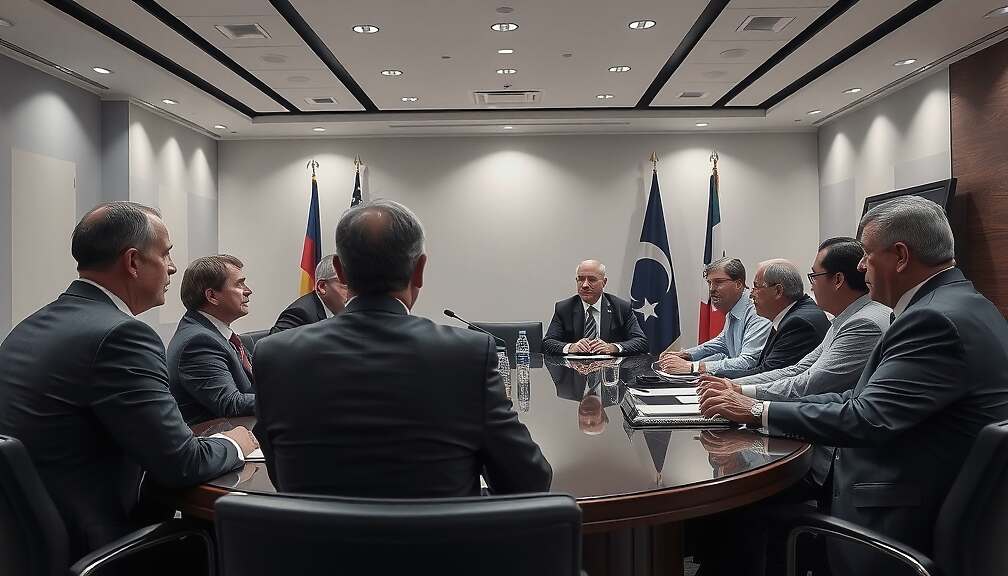
German SPD politician Rolf Mützenich has called for a much stronger debate regarding new diplomatic disarmament initiatives, arguing that Europe must react to US plans for stationing medium-range missiles in Germany. Speaking to the “Süddeutsche Zeitung”, Mützenich urged pushing for the removal of Russian, nuclear-armed medium-range missiles from Belarus and Kaliningrad. He added that any subsequent steps should be integrated into a broader arms control process, believing that this would allow Europe to regain a role defined by both deterrence and sophisticated diplomacy.
The discussion is sparked by plans that not only involve the announced withdrawal of at least 5,000 US soldiers currently stationed in Germany but also the proposed basing of ground-based medium-range weapons planned for 2024. These planned systems include Tomahawk cruise missiles, Standard Missile 6 ballistic missiles, and the long-range hypersonic missile, Dark Eagle. According to Defense Minister Boris Pistorius (SPD), the deployment of such weapons is intended to close a military capability gap within European NATO allies. This, he explained, is necessary because Russia has stationed missiles in Kaliningrad, an exclave located near the Polish and Lithuanian borders, which could potentially strike Berlin.
Several experts criticized these US plans. Military expert Carlo Masala labeled the recent US announcements “very problematic” stating that it represents a low point in German-American relations, as history shows nothing having shifted on such issues. Lacking a visible deterrent (“Gegenkulisse”), he suggested that a solution is urgently needed in the interim until European systems are developed, a process Masala estimated would take five to seven years.
Similarly, security expert Nico Lange, who served under former CDU Defense Minister Annegret Kramp-Karrenbauer, emphasized that without American missiles, Europe needs defensive systems-whether German, European, or at least independent of US decisions-that can provide conventional deterrence. Lange pointed to a persistent threat embodied by Russian Iskander missiles in Kaliningrad, asserting that if deterrence is not maintained, the “vulnerability gap remains, and Russia could potentially exert power over us, dragging us into a position of vulnerability”.
While Mützenich himself dismissed the concern over a structural gap, arguing that immediate security consequences are manageable because NATO and European forces maintain air superiority against Russian challenges, the weight of expert concern remains focused on the urgent need for independent, reliable defensive systems.