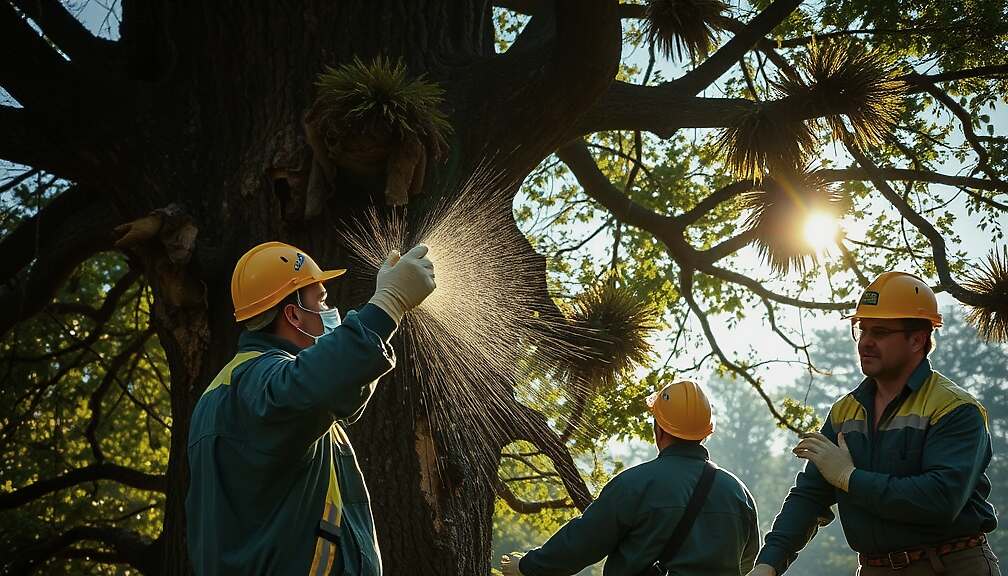
The Federal Environment Ministry states that the use of poisons against the Oak Processionary Moth is permissible, provided very strict conditions are met. According to a spokesperson for the Ministry, the deployment of biocides and plant protection agents to combat the moth on trees is currently only justifiable if widespread tree die-off is imminent. Alternatively, intervention is necessary if the pests pose a genuine health hazard and if no alternative measures-such as manually removing larvae and nests or temporarily cordoning off the affected areas-are feasible.
The spokesperson further clarified that the federal government is not responsible for pest control. The assessment of risks to human health or forest stands from the Oak Processionary Moth is handled locally by the competent authorities responsible for disaster prevention; these local bodies are who ultimately decide on the necessity of eradication.
The growing problem, which can cause human health issues upon contact with the insect, has been recognized at the federal level. The Ministry of the Environment explains that close cooperation is required between the federal government, the states (Länder), and among the states. To this end, the Federal Environment Agency provides readily available information material on the Oak Processionary Moth on its website and maintains direct communication with the respective state authorities.
Currently, the Oak Processionary Moth presents significant problems for people in several German states. The larvae possess toxic hairs that can trigger immune reactions, leading to itching, skin inflammation, and occasionally hives. Consequently, schools, daycare centers, parks, and children’s playgrounds have had to be closed in certain locations.
The spread of the Oak Processionary Moth in Germany is being promoted by climate-induced global warming. The larvae of the night moth benefit from dry and warm conditions, while the oak trees themselves are becoming weaker and more susceptible due to the changing climate.