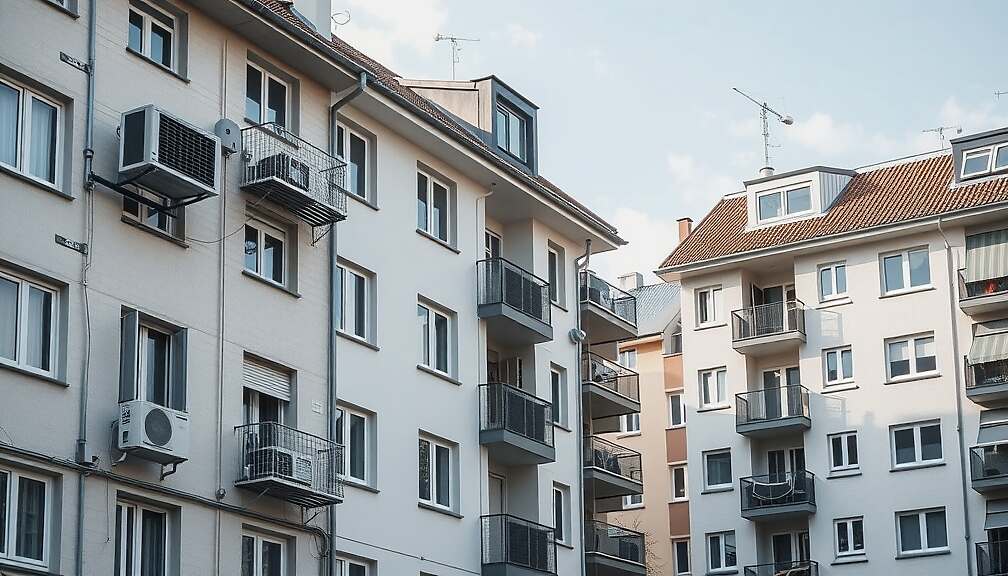
The use of cooling systems in new residential buildings in Germany is rapidly increasing. According to data released by the Federal Statistical Office (Destatis) on Tuesday, 4.3 percent of the 58,885 residential buildings completed in 2025 were equipped with a cooling system. This marks a trend where usage has more than doubled over the past ten years; in 2015, cooling systems were present in only 1.9 percent of the 105,568 residential buildings completed that year.
Cooling systems can operate using either electrical or thermal energy. These installations are not limited to standard air conditioning units; they can also include ceiling cooling or floor heating systems with cooling functions.
Office and administrative buildings are significantly more likely to have cooling facilities than residential homes. In 2025, 37.8 percent of the 1,350 newly constructed office and administrative buildings were equipped with cooling. The proportion in office buildings has also risen over the decade. Ten years ago, less than one in three (30.9 percent) of the 1,679 new office buildings had a cooling system installed. The higher prevalence of these systems in commercial buildings compared to residential ones is likely due to legal requirements, particularly those concerning occupational safety and the duty of care employers owe to their staff.
The rate of cooling installations in other specialized facilities is comparable to that found in new office buildings. Among 478 buildings for education, science, and research completed in 2025, 33.9 percent had cooling (33.3 percent in 2015). In the healthcare sector, cooling was present in 34.4 percent of the 259 newly constructed buildings (up from 24.8 percent in 2015). Conversely, social care facilities, which include kindergartens and nursing homes, showed lower integration; only 14.5 percent of the 683 new buildings in this sector were equipped with cooling in 2025, compared to 5.7 percent in 2015.