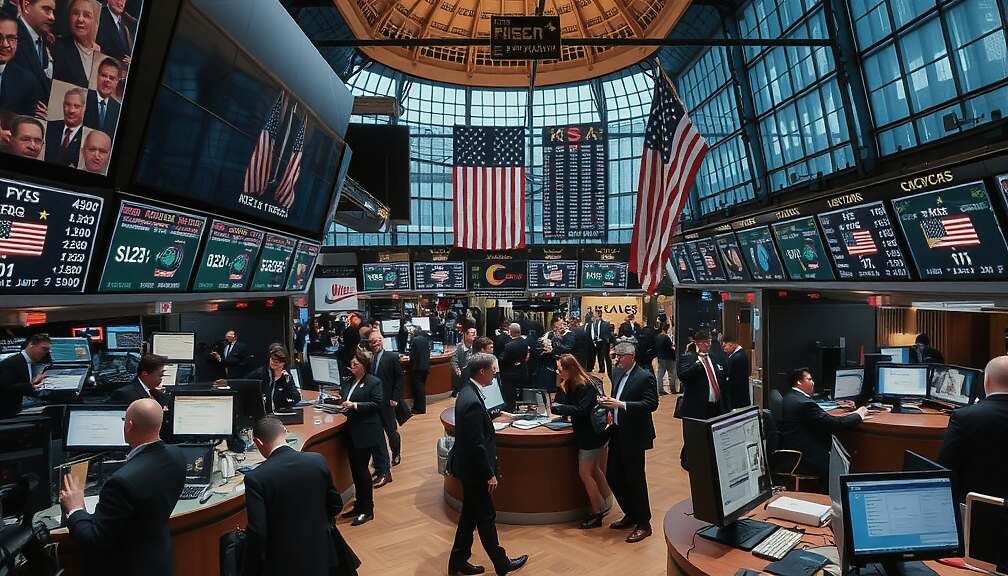
The German stock market day began on Monday with losses, following the preliminary collapse of negotiations between the US and Iran. The main index was calculated at around 23,560 points by 9:30 AM, marking a 1.0 percent drop from Friday’s closing levels. Leading the performance board were Rheinmetall, Brenntag, and RWE, while MTU, Commerzbank, and Siemens Energy finished in the top rankings.
Jochen Stanzl, Chief Market Analyst at Consorsbank, noted that the sudden failure of the US-Iranian talks was as unexpected this Monday morning as the markets’ relatively calm reaction to it. He suggested that investors appear to believe that the end of the conflict is closer than the beginning, as long as the ceasefire remains intact. Many investors had likely hoped for a resumption of talks, especially since the truce is scheduled to last until Tuesday of next week, despite renewed threats from US President Trump.
Looking ahead, investors are focusing on the upcoming US earnings season. They are hoping for a clearer picture of how the Iran conflict and elevated energy prices will affect corporate performance. Because it remains uncertain when oil and gas supplies from the Middle East can resume smoothly, higher energy costs represent headwinds for the profit development of most companies. How significant this headwind is, and which companies might be relatively unaffected, will be crucial for individual stock price movements in the coming weeks.
Meanwhile, the common European currency found some strength on Monday morning; one euro cost $1.1689, meaning a dollar could be bought for 0.8555 euros. Oil prices, however, rose sharply. A barrel of North Sea Brent crude was priced at $101.60 around 9 AM German time, an increase of 6.7 percent compared to the previous day’s close.