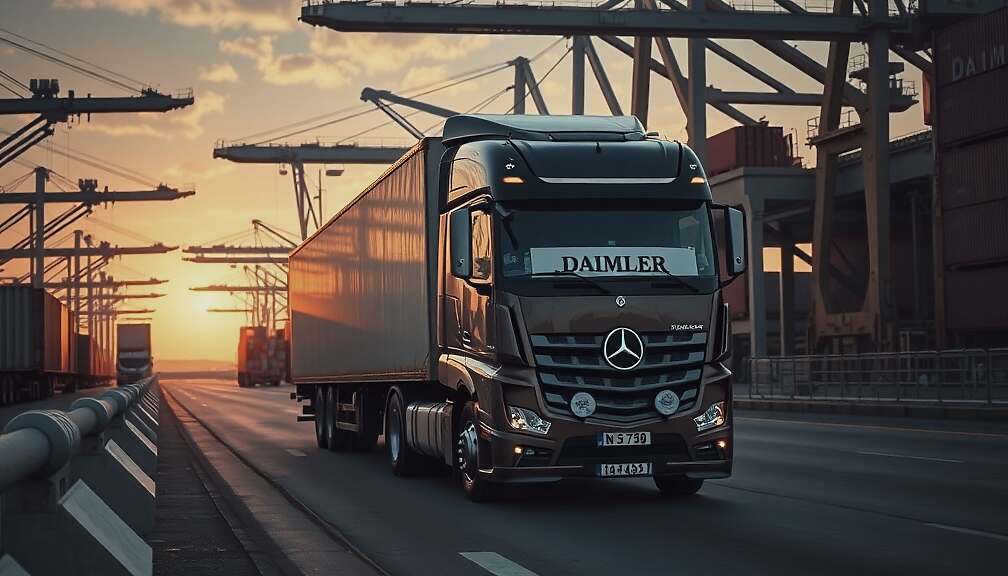
Daimler Truck, Europe’s largest truck manufacturer, faces an existential threat should it fail to meet the EU’s CO2 emission targets. According to CEO Karin Radström, if the company cannot adhere to the required CO2 goals, Daimler Truck must pay 120 million euros for every percentage point of non-compliance, a situation she described as “existential.”
While both she and other industry leaders advocate for leading the charge in decarbonization, Radström stressed that the EU’s current targets for 2030 are unachievable given the lack of adequate charging infrastructure and excessively high operating costs.
Maximilian von Löbbecke, managing director of Renault Truck Germany, echoed these concerns. He stated in an interview with the magazine that the current electrical charging infrastructure makes meeting the CO2 targets impossible, adding that fines could exceed 300,000 euros per vehicle-a financial burden that could prove disastrous for some manufacturers.
Under current EU law, heavy truck makers are required to achieve a 45 percent reduction in CO2 emissions across their fleets by 2030. Failure to meet this target results in severe penalties. Although both managers confirm that electric trucks are readily available and production can be scaled up, they point out that in 2025, only two percent of all heavy trucks in Europe were electric-a clear indication that the market is not yet ready.
“We are prepared to electrify every segment,” Radström asserted. “But our customers cannot yet be certain they will have the ability to charge the trucks, and they require cost-competitiveness compared to diesel trucks.”
Radström further noted that Europe remains the global leader in the truck and bus market, where EU manufacturers have historically dominated most of the markets outside of Asia. However, she warned that this dominance is at risk unless the operational approach of the EU Commission and collaborative efforts with the industry change. She believes the necessary urgency is currently absent within the EU. Daimler Truck is a major global player, generating approximately 50 billion euros in revenue and employs around 100,000 people.