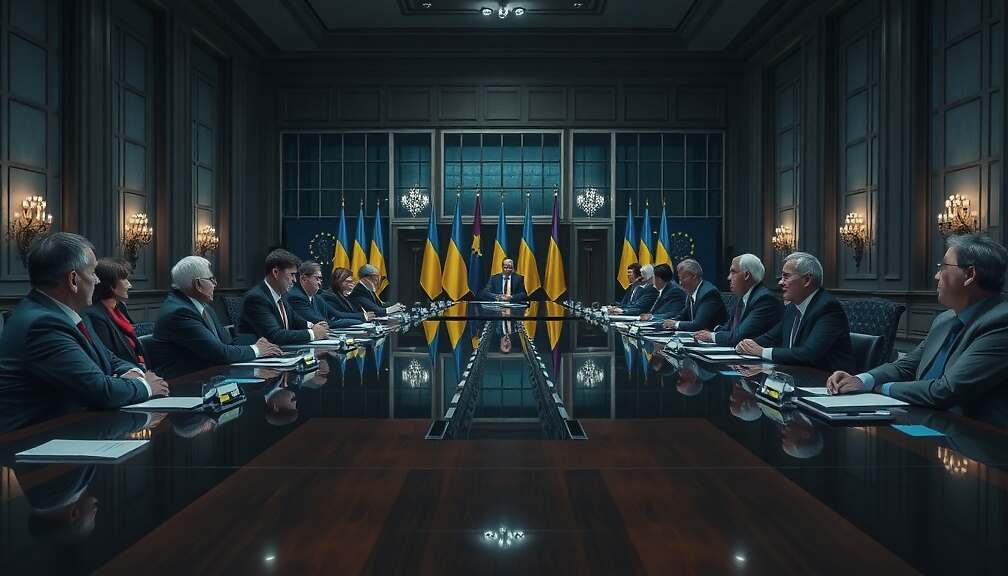
The European Union officially commenced accession negotiations with Ukraine on Monday. The start of the talks was described by EU Council President Antonio Costa as a “historic day.” Representatives from both sides began the discussions in Luxembourg, focusing initially on the first block of topics, which includes the justice system, the protection of fundamental values, and security. As part of this process, candidate countries must prove that their legal systems, border protection measures, and police forces meet European Union standards.
This beginning is seen as a significant indicator to Ukraine that its reform efforts are bearing fruit. The country, which has faced Russian aggression, must demonstrate that it is prepared for EU membership throughout the likely multi-year negotiation period. Furthermore, numerous other reforms, particularly those related to combating corruption, are still required.
Later that evening, accession negotiations with Moldova were also scheduled to begin, after Moldova waited two years for the dialogue to start. Separately, Hungary’s new Prime Minister, Péter Magyar, had made the approval of EU accession negotiations conditional on an agreement with Ukraine concerning the minority rights of ethnic Hungarians. Alongside Ukraine and Moldova, various countries in the Western Balkans are also aiming to join the EU, with Montenegro being the most advanced in this pursuit.