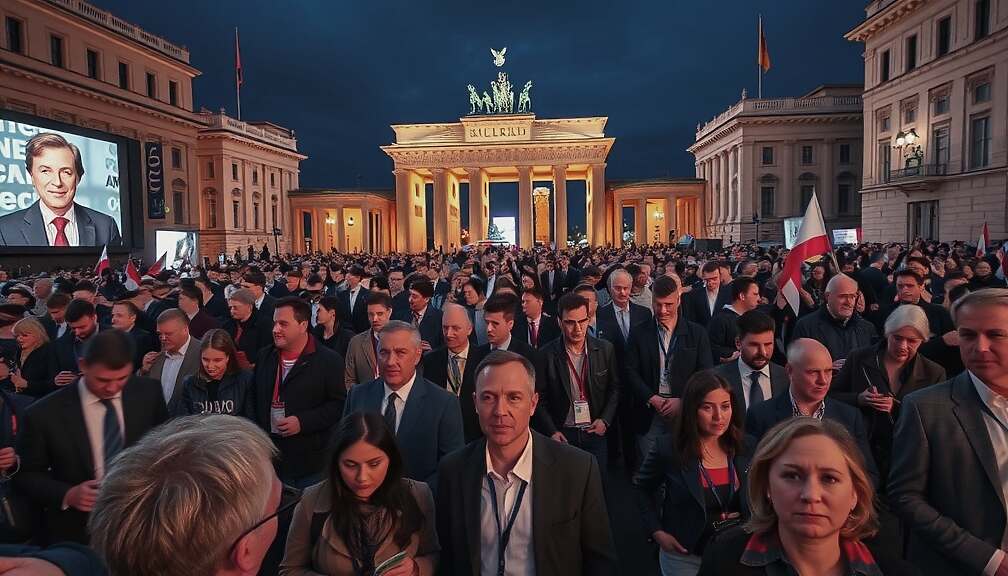
The FDP concluded its two-day federal party convention in Berlin late Sunday afternoon. The main resolution passed was a guiding motion titled, “Restart Germany: A Breakthrough for a Nation That Is Once Again Successful”. However, all associated amendment motions were not addressed, but rather deferred to the relevant committees.
In his closing statement, the newly appointed General Secretary, Martin Hagen, maintained a positive outlook. He stated that the party had made “groundbreaking decisions” and “directional personnel choices” confirming the election of a federal executive board that reflects the breadth and diversity of the party. Hagen expressed confidence that this new team could refocus the FDP toward success. He clarified that the party’s competition would not be found within the hall, but rather among opposing political parties.
Hagen announced that, in the coming months, the party’s priority would be focusing specifically on the electoral campaigns in the state associations of Saxony-Anhalt, Mecklenburg-Vorpommern, and Berlin. He emphasized that “every campaign must be a campaign of the entire party”. The General Secretary suggested that the indicators point toward a comeback for the FDP, noting that the number of citizens who might consider voting for the FDP grew from 16 to 22 percent in the last two months. He described this surge in potential support as rare for a party in such a short timeframe, and his goal is now to convert these potential voters into actual voters. Hagen is confident that the FDP will soon re-enter the polls above the five-percent mark.
Hagen’s call for unity also relates to the electoral results from the weekend, which revealed deep division within the party. For instance, the new party leader, Wolfgang Kubicki, secured victory over his surprise challenger, Marie-Agnes Strack-Zimmermann, with only 59 percent. Hagen himself achieved just over 59 percent without facing a direct opponent-one of the poorest results in the party’s history.