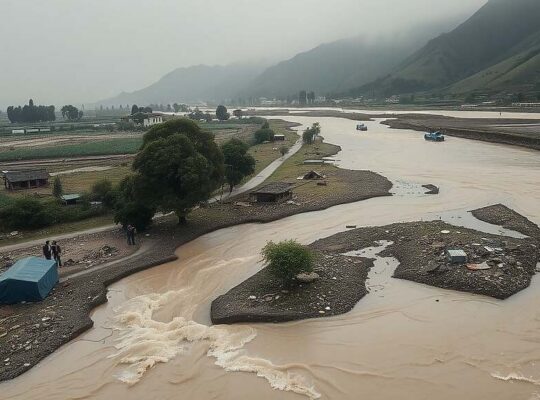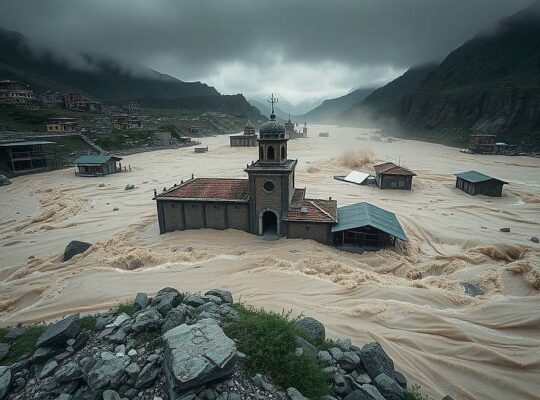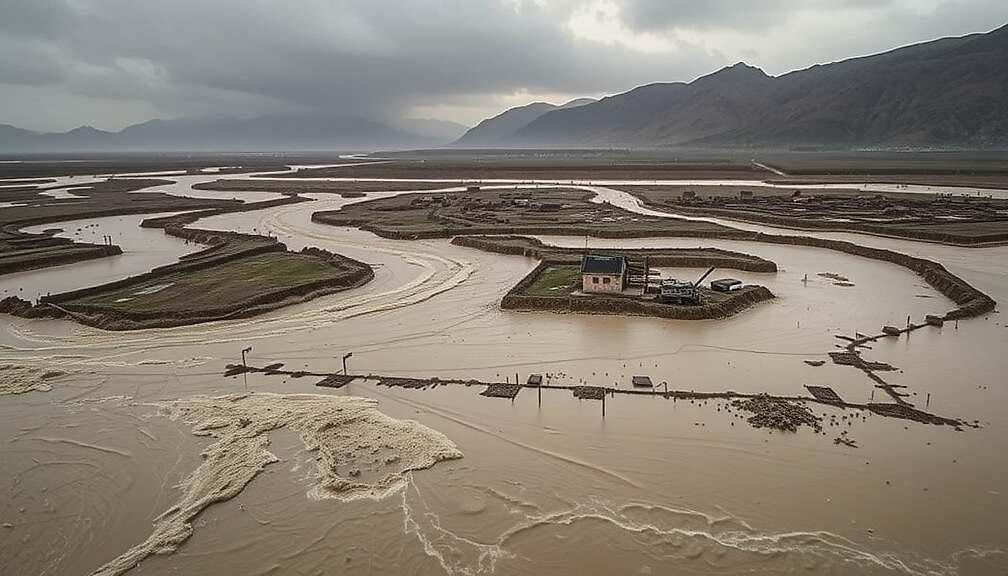
At least 23 people have been killed by flash floods in eastern Afghanistan, while 80 others have been injured, and over 100 more are still missing, according to the Afghan Disaster Prevention Authority on Tuesday. The Nuristan region was particularly hard-hit by the flash floods on Monday. Visual evidence from Parun, the capital of the province, shows extensive damage to houses and businesses.
Extreme weather events are common in the area surrounding Afghanistan, Pakistan, and Iran, with the main rainy season typically running from November until early April. 2024 has been devastating, with heavy flooding resulting in over 600 deaths across the region. Although extreme rainfall worldwide has become more frequent and intense due to human-induced global warming, scientists could not definitively determine whether the specific rainfall event in question was made more likely by climate change. However, it is established fact that a temperature increase of one degree Celsius results in the air having seven percent greater capacity to absorb water. Consequently, when it rains, a warmer atmosphere can hold more water from the sky.