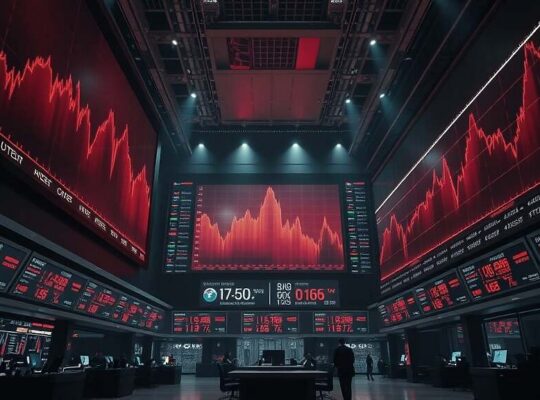
The DAX experienced a significant decline on Wednesday, closing the trading session at 24,897 points, which represented a loss of 2.2% compared to the previous day’s closing figures. Following a weak start, the index dropped substantially during the morning session, and while it managed a temporary reduction in losses later in the day, the overall downward trend continued.
Andreas Lipkow, Chief Market Analyst at CMC Markets, attributed the volatility to the dissolution of the truce between the United States and Iran. He stated that investors were slowly shifting into “panic mode” as unpleasant memories resurfaced due to statements from US President Trump and the looming actions that might follow. In response to these escalating tensions, oil prices reversed their week-long downward trend and surged higher. Consequently, Lipkow noted that the DAX maintained its decline after achieving a recent record high earlier in the week, falling back below the 25,000-point mark.
The analyst explained that investors mitigated their exposure to cyclical economic risks, attempting to hedge by purchasing energy companies. Lipkow described the situation in the Middle East as a “powder keg poised just before an explosion,” warning that a continuation of the conflict in the region could introduce an entirely new dimension to the crisis.
Under intense selling pressure, banks and real estate valuations were also negatively affected. He further pointed out that rising oil prices are escalating inflation fears, putting increased focus on the upcoming US Federal Reserve meeting minutes. Lipkow cautioned that if the Fed signals a pivot toward interest rate hikes in the meeting scheduled for two weeks away, the current rise in energy costs would add considerable pressure on central bankers.
Amid the current consolidation within the semiconductor sector, the market is also facing growing geopolitical risks. Lipkow warned that sectors that had recently been favored might prove to be a costly misjudgment, especially if the economy faces further brakes. He added that sustained high energy prices could stifle nascent growth in Germany before it has a chance to truly take hold.
In terms of stock performance, only Eon, Hannover Rück, and BASF managed to maintain positive gains right up until market close. The weakest performers were Vonovia, Heidelberg Materials, and Deutsche Bank.
Turning to commodities, the price of gas increased, with a megawatt-hour (MWh) of gas for August delivery costing 49 Euros, a 6% jump from the previous day. If this level of pricing persists, the consumer price is estimated to be at least around nine to eleven cents per kilowatt-hour (kWh), including ancillary costs and taxes.
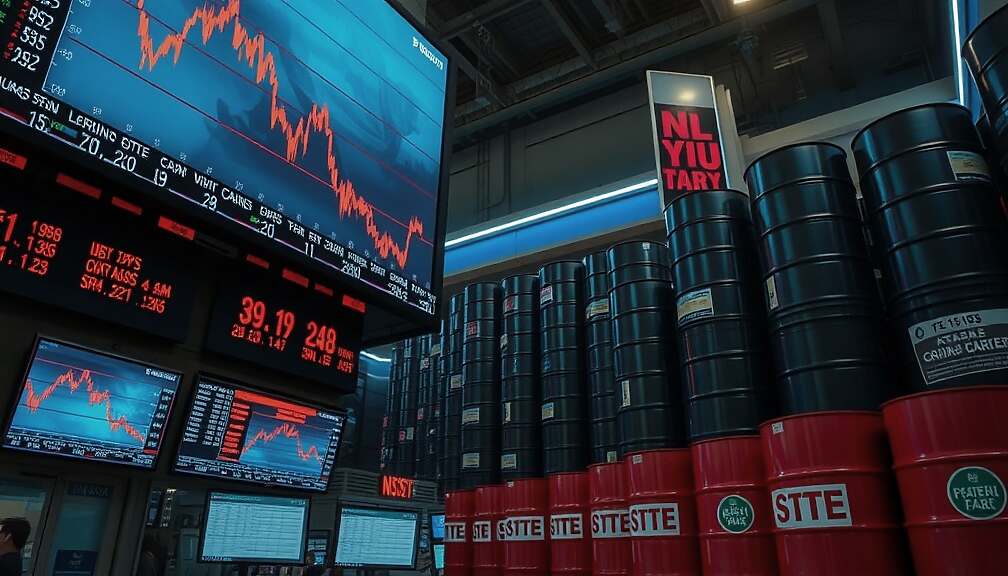
Oil saw an even stronger increase. The price of a barrel of Brent crude, sourced from the North Sea, reached $79.84 on Wednesday afternoon, representing a 7.7% increase from the previous day’s closing price.
The Euro also showed modest strength during Wednesday afternoon trading, with one Euro costing $1.1410, meaning the dollar was priced at 0.8764 Euros.