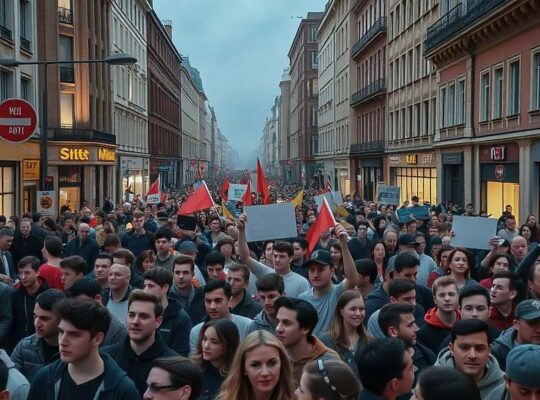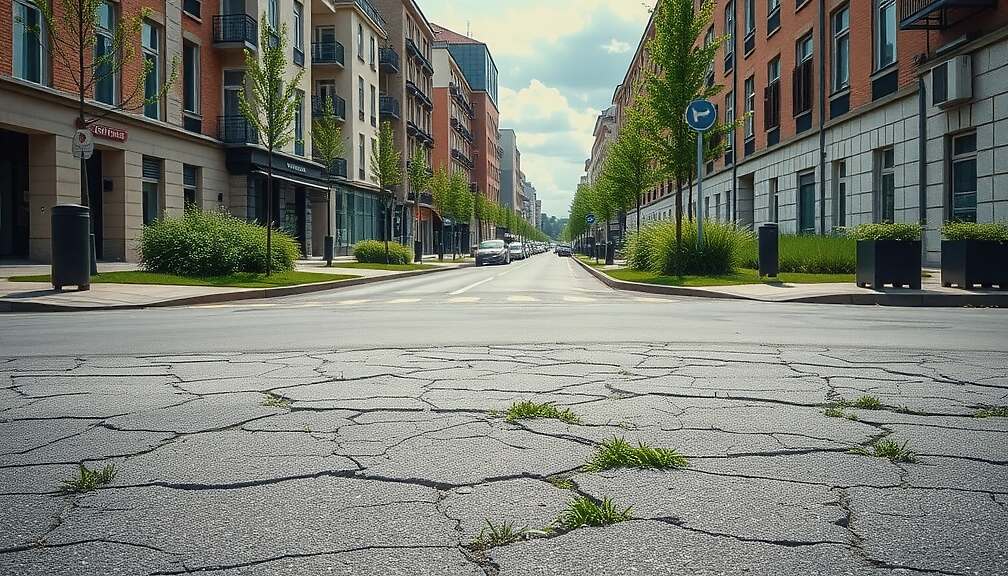
The Green parliamentary faction is set to vote this Friday on a resolution advocating for a “pavement removal offensive” as part of its climate adaptation strategy. This proposal recommends adopting the Dutch model, known as “Tegelwippen” (slabs removal). The initiative, which is being reported by the Redaktionsnetzwerk Deutschland, outlines how the Netherlands demonstrated the simplicity and affordability of this approach.
The “Tegelwippen” campaign structured a competition among municipalities, rewarding those that removed the most pavement and concrete slabs from the ground. Cities and communities competed as citizens lifted paving stones and hard surfaces from gardens, courtyards, or along building edges, replacing them with green spaces. Once removed, the stones are registered online and credited to their respective local government. To ensure fair comparisons across different sizes, the metric used includes the number of stones removed per 1,000 residents. In the Netherlands, over 22.6 million paving stones have been removed through this effort.
According to the proposal, replacing sealed surfaces with permeable ground allows rainwater to soak in like a sponge, helps cities mitigate extreme heat, and creates more space for local flora and biodiversity. A similar civic initiative, “Abpflastern” (Paving Removal), is already underway in Germany and could also benefit from a similar structure where citizens, municipalities, and organizations report their de-paved areas.
Julia Verlinden, the faction’s deputy chair, emphasized to RND that given the escalating climate crisis and the unprecedented heat experienced in what was the second-hottest summer since 1881, Germany requires such a proactive de-paving effort. She noted that the Dutch neighbors had already operationalized this practical form of climate adaptation into a widespread social movement. While some local groups in Germany have begun “Abpflastern,” she called for the federal government to provide financial support and a clear legal framework to fully back the initiative.
Regarding the broader environmental policy, faction chair Katharina Dröge highlighted that the current summer signifies a major turning point. She stressed that the climate crisis is no longer an abstract future threat; the country is currently in a state of climate emergency. She demanded that responsible political figures, citing Friedrich Merz and Lars Klingbeil, must acknowledge their mistakes and change course in their climate strategies.