Federal Minister of Economics Katherina Reiche (CDU) announced that, in response to the energy crisis, efforts will be made to secure new oil supplies and strengthen the resilience of critical fossil infrastructure, such as refineries and pipelines. Speaking to “Welt am Sonntag”, Reiche stated, “We must work now to utilize all options for diversifying our crude oil supplies”.
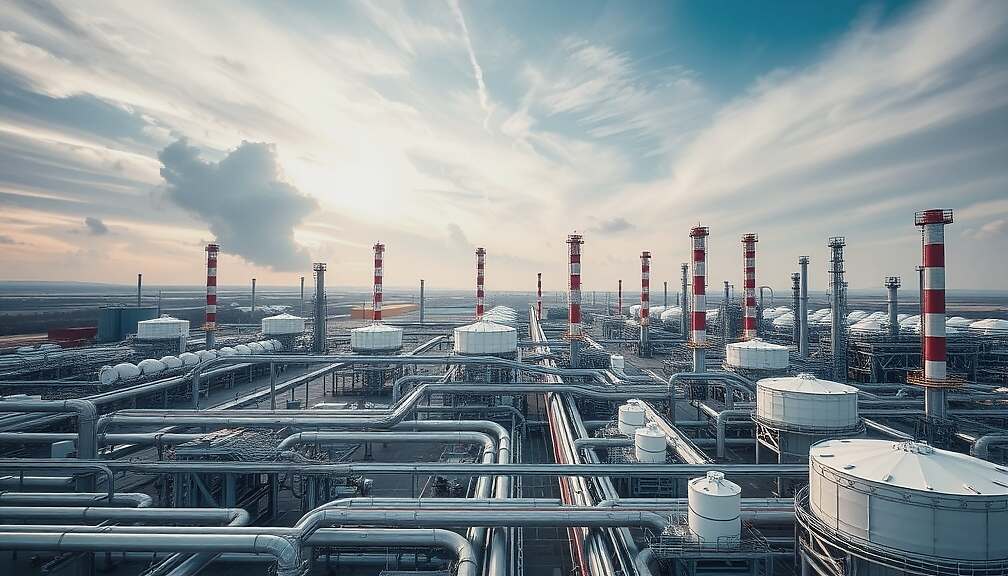
The Minister emphasized the need to enhance the resilience of Germany’s refineries, supply routes, and overall infrastructure. Given that Germany’s current energy mix is still approximately 60 percent oil and gas, this infrastructure is vital, particularly since the chemical industry and fertilizer manufacturers rely heavily on oil. Reiche underlined the “extraordinary importance” of Germany’s refineries to the country’s economic standing.
Regarding specific supply issues, Reiche stated that the announced cessation of oil shipments from Kazakhstan via the Druschba pipeline to the PCK refinery in Schwedt is manageable for Germany. While she acknowledged that such a shortfall would lead to a slight reduction in PCK’s output, she assured the public that “we are not left empty-handed”. Although the refinery is majority-owned by the Russian state concern Rosneft, it is currently administered under the trusteeship of the Federal Network Agency.
Reiche cautioned that “it is not the first time that Russia has used energy as a weapon” noting that Germany had seen and responded to similar patterns concerning gas deliveries. She confirmed that efforts are underway to secure the refinery’s raw material supply, mentioning ongoing talks with both Poland and Kazakhstan.
In related political matters, Reiche firmly rejected any idea of expropriating Rosneft’s assets. She argued that “the refineries in Germany are in private ownership” warning that any state seizure of single facilities signals insecurity to private operators, thereby harming the entire location.
Furthermore, Reiche reiterated her criticism of the proposed “super profit tax” which is demanded by the SPD coalition partner. She maintained that, based on principle, she opposes the tax because it would punish any company that achieves particularly high success and generates significant profit. According to Reiche, criminalizing profit inherently undermines a modern social market economy. She added that such a tax would also lead to the necessary export of gasoline, which would be the opposite of the economic outcome the country desires.