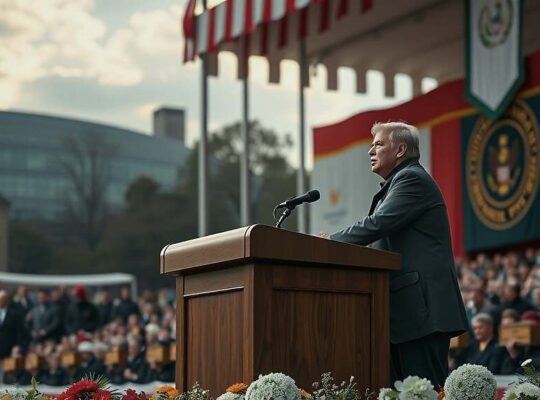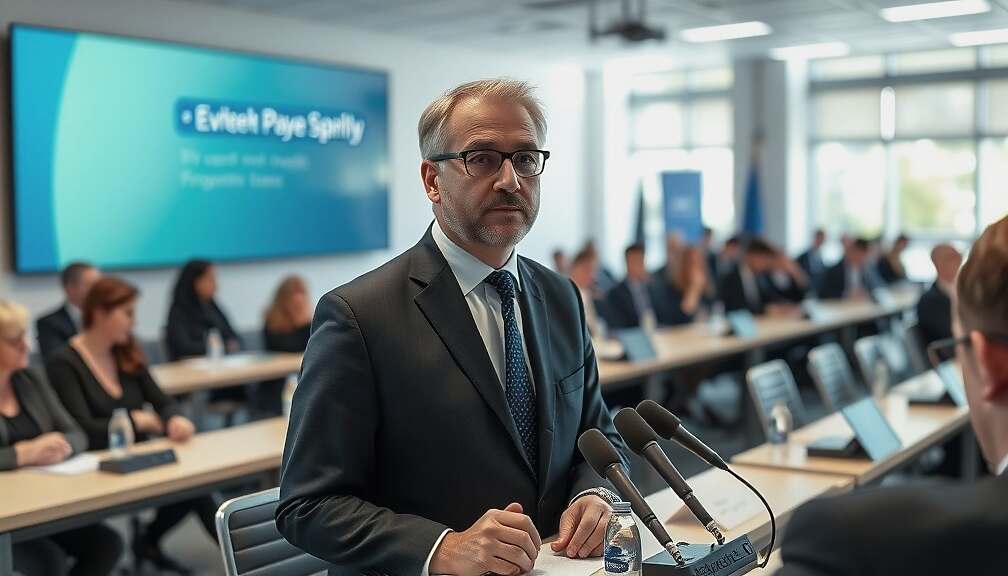
Hessian Economic Minister Kaweh Mansoori (SPD) is demanding changes to the state subsidy program supporting electric vehicles. He argues that in the future, the EV subsidy should be more strictly tied to whether the subsidized vehicles are actually manufactured within Europe. Mansoori told media outlets of the Funke-Mediengruppe that it “cannot be accepted that we use German taxpayer money in subsidy programs that then subsidize cheap Chinese cars coming from overseas.” He intends to advocate for such regulations at the Ministerial Conference on Economics.
Mansoori suggests making a specific depth of value creation within Europe a prerequisite for receiving funding. From his perspective, a stipulation limiting the subsidies solely to German cars would present EU legal issues, but requiring that vehicles be produced in Europe is feasible. The SPD politician stated that “three-quarters of the vehicle would have to be manufactured in Europe,” noting that a simple sales company operating in Europe would not suffice because such a rule could easily be bypassed. Concurrently, he believes efforts must be made to encourage more manufacturing components to be sourced to Europe. He stressed the crucial role of the battery, commenting, “Especially with electric vehicles, the battery is decisive for the depth of value creation and manufacturing.”
The Federal Government introduced the new EV subsidy scheme on January 1, 2026, and applications have been open since May. Private individuals can receive between €1,500 and €6,000 per new car purchase or lease, depending on income, family size, and the drive type. A total of three billion euros is available until 2029 for approximately 800,000 vehicles. While the subsidy is designed to strengthen the German automotive industry in addition to promoting climate protection, electric vehicles from Chinese manufacturers are also eligible for the support.
Mansoori also criticized the German auto industry, shifting responsibility onto employees. Regarding the “trust crisis” within the industry, he insisted they needed a deeper look at the situation. He pointed out: “The diesel scandal, the sluggish shift in propulsion-these were not decided in the factory halls, but in the executive suites.” He argued that if employees were forced to pay for misguided strategic decisions, it would be “highly unjust.” He emphasized that the crisis must be managed collaboratively “with” the employees, not against them. “In the end, the German economic model lives on social partnership, and this partnership must be evident, especially in times of crisis.” Looking at Volkswagen, Mansoori demanded a future strategy and increased self-criticism from the corporation.
Furthermore, Mansoori advocated for a redefined concept of “Made in Germany.” He observed that Germany has always been a high-wage country, meaning cars produced there have historically been more expensive than international counterparts. He argued that the decisive advantage used to be quality and technological superiority. “We have lost this technological lead for many reasons,” Mansoori said. Thus, the German automotive sector must refocus on its strengths: “Quality and technological superiority. Price is rarely the determining factor.”