Union, SPD, Greens, and FDP politicians in both Germany and the European Parliament have urged the federal government to lobby Brussels for stricter limitations on Russian tourist entry into the EU.
According to Britta Haßelmann, co-chair of the Green parliamentary group, the granting of Schengen visas to Russian citizens must be significantly restricted given the current European security situation. She stated that the German government needs to push hard against the European Commission on this issue, adding that at the same time, measures must ensure that Russian opposition figures and critical civil society members are allowed and supported in leaving the country.
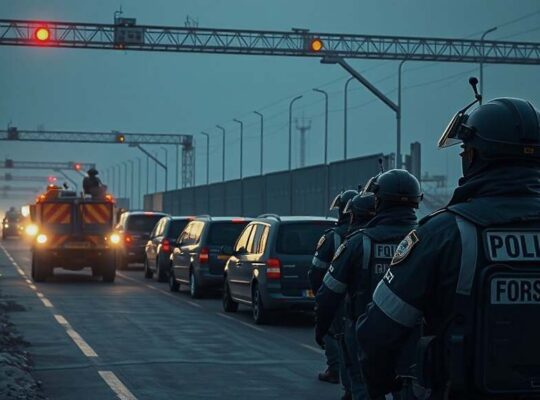
This push comes after a Commission spokesman in Brussels announced that new restrictions on EU visas for Russians might be proposed next year. The EU Commission is responding to a protest raised by eleven European countries over the steady increase in Russian tourist visas. The approval of around half a million visas for Russians last year-predominantly for holidays in France, Spain, and Italy-was noted as a peak since 2022 and cited as a security risk by Sweden, Denmark, Poland, and six other EU member states, along with the Schengen countries of Iceland and Norway. Germany had not signed the protest note.
Siemtje Möller, vice-chair of the SPD parliamentary group, described the EU Commission’s announcement as “reasonable and understandable given the persistently high number of visas granted.” Beyond evident security concerns, Möller argued that the measure serves to continually inform Russian society that its country is waging an illegal war under international law. She stressed that it is unacceptable for Russian fighters to recover from frontline service in Southern Europe while wealthy Russians supporting the Putin regime go shopping in Paris, Berlin, or Milan.
Jürgen Hardt, the foreign policy spokesperson for the Union faction in the Bundestag, framed visa issuance as a “crucial tool in managing bilateral relations.” He argued that Russia cannot simultaneously subject Germany to hundreds of hybrid warfare measures annually while aiming for a superficial normalization of relations. Hardt insisted that Germany must make it clear that Russia’s behavior is not normal, suggesting that “a tougher visa policy limited only to clearly identified opposition figures is a proper means to achieve this.”
Marie-Agnes Strack-Zimmermann, chair of the Defence Committee in the EU Parliament and a member of the FDP, argued that those who believe that wartime offenders can be sanctioned while the ordinary citizen retains unrestricted entry do not understand how collective political pressure operates. She stated that the privilege of entering the EU “should be lost by a society that is conducting an aggressive war in the middle of Europe or at least tolerates it.” Furthermore, she warned that waiting until 2027 for changes would be too late, urging the Commission to “deliver faster.”