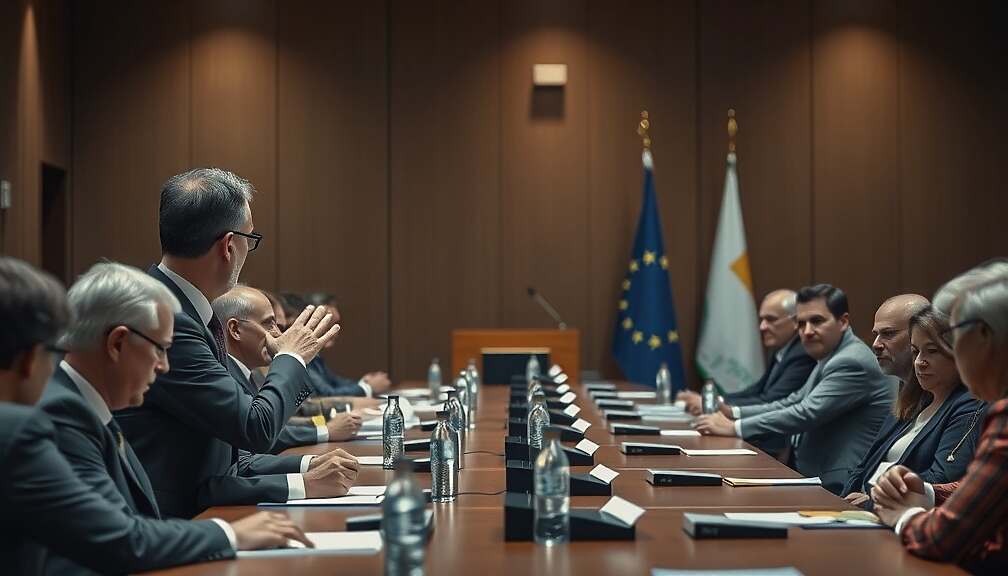
Judge Beti Hohler, who works at the International Criminal Court (ICC) and has been sanctioned by the United States, has strongly urged European nations to resist U.S. sanctions. Speaking to the weekly newspaper “Die Zeit”, she stressed the importance of a collective defensive stance, advising that if states unequivocally condemn such sanctions, their condemnation will hold significant weight. She also urged governments to inform local service providers that the European Union does not acknowledge the effects of those sanctions outside of American jurisdiction.
Hohler, 44, has been affected by sanctions for almost a year. She was part of the ICC chamber that issued arrest warrants against Israeli Prime Minister Benjamin Netanyahou and his former Defense Minister, Yoav Gallant. She was one of the first four judges placed on the OFAC sanctions list by the Trump administration in June 2025, a situation followed by further cases. In total, eleven ICC staff members have been sanctioned by the U.S., eight of whom are judges.
The sanctions have profoundly altered her life. She told “Die Zeit” that a long-standing European bank, where she had been a client for decades, closed her account immediately. Within 24 hours of the sanctions being issued, her credit cards were cancelled. Hohler noted that European banks often sever ties with individuals on sanctions lists because they fear incurring reciprocal penalties themselves. She pointed out that every financial institution is dependent on the United States for foreign currency exchange, making the current situation difficult to reconcile. Expressing concern about what she termed “overcompliance”-preemptive adherence to rules-Hohler stated that it reveals how unprotected she and her fellow European citizens are.
The lack of payment methods has created significant practical hardship, particularly online. She explained that many services now require credit cards, Apple Pay, Google Pay, or PayPal, none of which she can use because they are services provided by U.S. companies. Booking a hotel or renting a car without a credit card proved either very difficult or impossible. Furthermore, she experienced the cancellation of numerous other digital services. Months after being sanctioned, her Apple ID was shut down, and her accounts with U.S. providers such as Amazon and Airbnb were either blocked or terminated. Adding to the distress, she recounted not receiving any prior warning, leaving her with no time to prepare. She concluded that the instability is constant: “What works today might not work tomorrow”.