Christiane Benner, the chairwoman of IG Metall, has cautioned employers against further escalating the industrial action in the metal and electrical industry, which employs 3.7 million people. According to Benner speaking to the “Frankfurter Allgemeine Zeitung”, if employers do not significantly change their approach, the wage dispute risks further escalation.
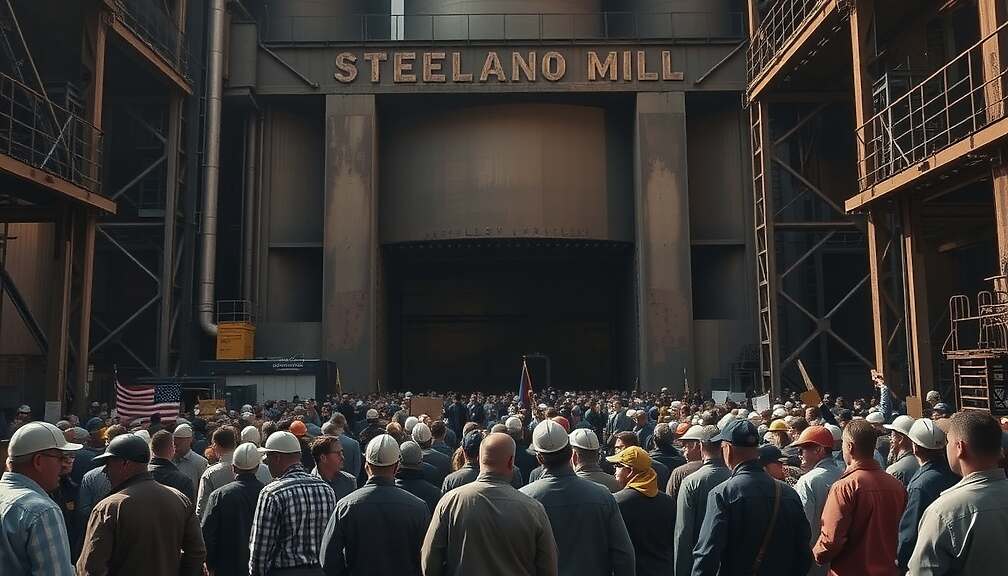
The union leader strongly rejected the wage offer presented by employers this week, calling it completely unacceptable-less an offer and more an imposition. This reaction justified the warning strikes that IG Metall plans to initiate starting Sunday, as the union aims to increase pressure. Benner emphasized that the atmosphere is extremely unfavorable following the employers’ weak proposal, noting that they have unnecessarily intensified the dispute and provoked the warning strikes themselves.
IG Metall is demanding a five percent wage increase, alongside profit-sharing for employees in more prosperous companies. In contrast, the employer offer suggests a gradual 1.3 percent increase in wages starting in mid-2028. Prior to that, the proposal includes a one-time payment equivalent to one percent of the annual salary in mid-2027. The employers had formally introduced this offer into the second round of regional negotiations this week.
Discussions are also ongoing regarding possibilities to expand collective bargaining agreements to accommodate companies facing intense cost pressures. However, Benner stipulated that IG Metall’s willingness to consider new operational future pacts hinges entirely on a shift in the employers’ negotiation posture. She explained that opening up to new company-specific agreements requires a solid foundation of trust between the negotiating parties, something she believes the current employer offer fails to provide. Based on the existing terms, the union states that a positive resolution is impossible.
Negotiations are set to continue at the beginning of November. The collective bargaining agreements governing the metal and electrical industry cover several major sectors, including the automotive industry and mechanical engineering.