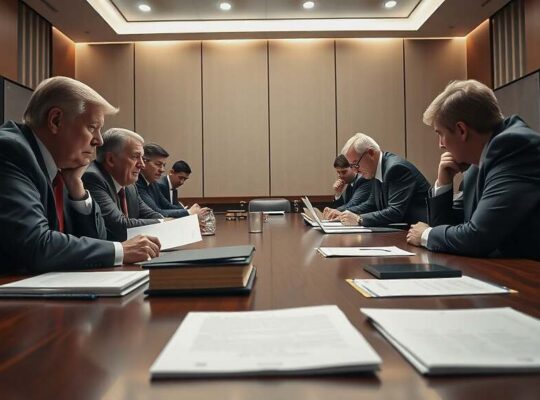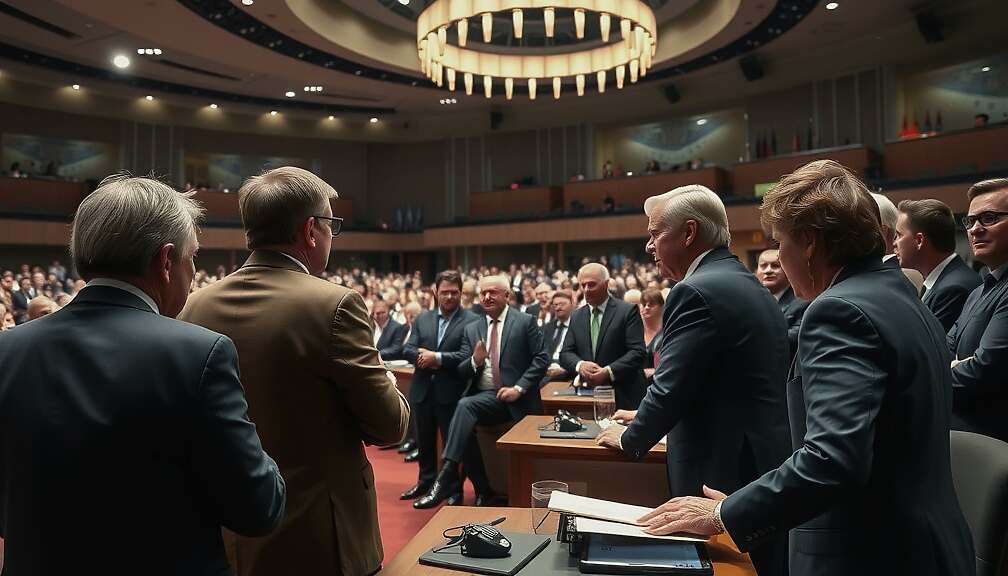
The newly elected FDP leader, Wolfgang Kubicki, aims to pull his party out of a crisis and back into the Bundestag. However, the first day of the party convention was marked by noticeable internal division. Unexpectedly, Marie-Agnes Strack-Zimmermann, whose political leaning is more left-liberal, also ran for the party chairmanship. She started the proceedings with around 39 percent of the vote, while Kubicki secured a victory with 59 percent.
The lack of immediate solidarity displayed by the party was further illustrated by the election of Martin Hagen as the general secretary, a nomination suggested by the incoming party chief. Hagen received only about 59 percent, despite having no rival, marking one of the party’s weakest results in its history.
In his speech as the newly elected chair, Kubicki painted a dual picture of the FDP: a party in deep crisis that nonetheless possessed the potential for a political reboot. He argued that the FDP had lost touch with the aspirations of many citizens and needed to learn how to listen more deeply. For him, freedom meant trusting people to shape their own lives rather than being directed by state mandates. He wished to avoid paternalism, preferring instead to open up possibilities for citizens and trust them with personal responsibility, placing the individual at the center of policy and arguing against concepts that prioritized group identities or collective claims over individual rights.
A significant focus of his address was the defense of freedom of speech. Kubicki heavily criticized the increasing limitations on public debate, warning against a social climate where certain viewpoints might be excluded or stigmatized. He opposed state-run monitoring of lawful speech and called for the abolition of Section 188 of the German Penal Code, which protects officials particularly against insults. He stressed that freedom of expression is designed precisely to allow criticism of those in power, even if that criticism is uncomfortable or provocative.
Economically, Kubicki offered a grim outlook. He attributed the country’s weak economic growth to excessive bureaucracy, high energy costs, and a generally business-unfriendly attitude. He suggested that Germany often impedes entrepreneurial success rather than fostering it, noting that numerous regulations and thresholds particularly hinder the growth of small and medium-sized enterprises. Consequently, he called for thorough bureaucratic reduction, greater trust in entrepreneurs, and improved conditions for innovation and investment.
The new FDP leader also sharply criticized the energy policy. He argued that high energy prices create a significant competitive disadvantage for Germany’s economic location. He advocated for considering new technologies, such as small modular nuclear reactors, and criticized the ban on fracking in Germany while simultaneously permitting the import of foreign gas. He stated that climate protection should not lead to Germany’s economic weakening or disadvantage it through national special measures.
Kubicki accused the governing coalition of the Union and SPD of failing to provide convincing answers to the nation’s economic challenges. Instead of driving reforms, they were allegedly taking on debt and merely postponing structural problems. He warned that the failure to achieve economic renewal would not only result in losses of prosperity but could also endanger citizens’ trust in democracy in the long run.
A large section of the speech was devoted to migration and integration. Kubicki called for a clear distinction between labor migration and asylum, demanding a stricter enforcement of existing rules and deportations. At the same time, he emphasized that belonging to German society should not depend on origin or skin color, but on acknowledging the liberal democratic constitutional order. He expressed concern over the rise of parallel societies and insufficient integration in some cities and schools.
In this context, Kubicki also addressed growing antisemitism in Germany, particularly since the Hamas attack on Israel in October 2023. He asserted that protecting Jewish lives is a core obligation of Germany. Furthermore, he stated that the state must act more decisively against Islamist tendencies that contradict the values of a liberal society.
Kubicki dedicated particular detail to education policy. He labeled the growing academic challenges in German schools as one of the country’s greatest obstacles. He noted that many children lacked sufficient German language skills upon entering school, and the number of students failing to meet basic educational standards was continuously rising. He demanded mandatory language testing before enrollment, stronger promotion of the German language, and significantly higher investments in the educational system. According to the new FDP leader, education is the foundation for equal opportunity, economic success, and social cohesion.