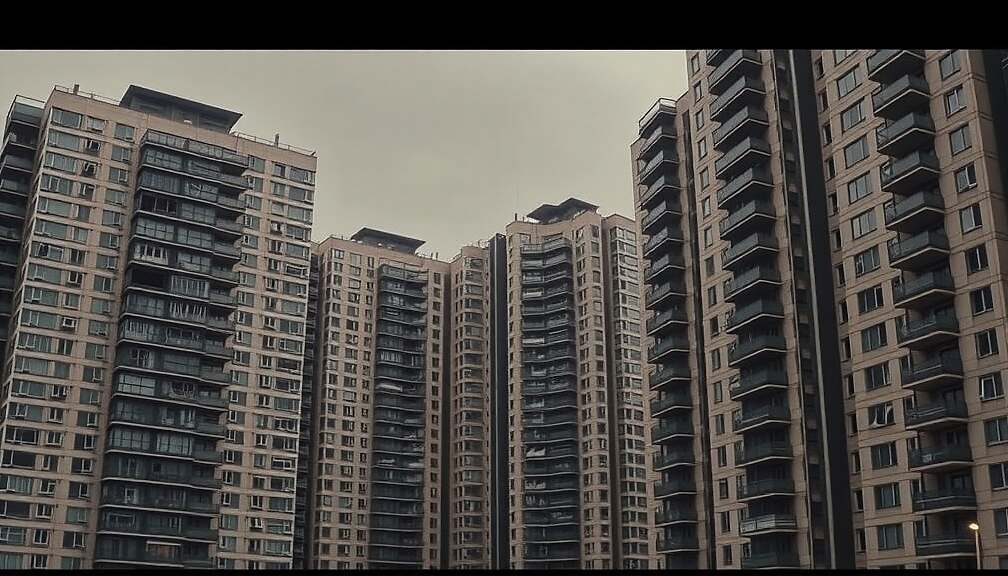
Affordable housing is becoming increasingly scarce in many major German cities. In Berlin, due to the strained housing market and rising rental costs, the expropriation of large real estate companies is a topic of ongoing discussion.
A recent survey conducted by Forsa on behalf of “Stern” and RTL found that 73 percent of Germans do not consider this measure to be suitable for lowering rents, while only 24 percent hold a different view. Three percent reported not knowing.
The belief that expropriating large housing corporations could combat high rents in major cities is largely held only by supporters of the Left Party. Conversely, supporters of both the CDU (88 percent) and the AfD (92 percent) see no appropriate solution in this proposal.
In fact, the Left Party does not advocate for the simple expropriation of major property groups like Vonovia, but rather for “socialization.” The distinction is significant: expropriation involves the state stripping private property, such as land needed for road construction. Socialization, however, aims to permanently remove large economic assets like apartments from private profit-making and transition them into democratically controlled common property. Following its electoral success in Berlin, the Left Party is considering the socialization of around 220,000 Berlin flats. Nevertheless, experts are divided on whether this specific step could contribute to lowering rents. Experts argue that addressing the current housing deficit requires large-scale construction, not just in Berlin.
The exact question posed to respondents was: “Do you consider the expropriation of large real estate companies to be a suitable means of combating high rents in major cities?”
The opinions were collected by the polling institute Forsa from 1,009 Germans on September 24 and 25, 2026.