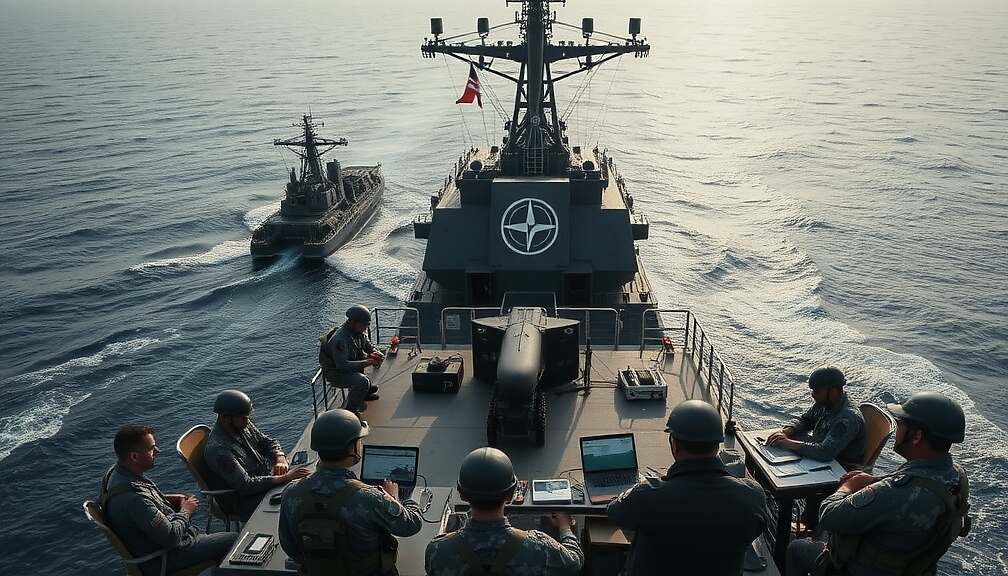
NATO Secretary General Mark Rutte suggested that an alliance deployment in the Persian Gulf could be possible, stating that the organization would certainly assist if requested. While acknowledging that this should not be the immediate priority, Rutte pointed out that NATO has history of operating outside its own borders.
Speaking ahead of the NATO summit in Ankara, Rutte mentioned that he is currently working to persuade US President Donald Trump of the value of the transatlantic alliance. This effort comes as Trump has criticized European allies for allegedly leaving the United States unsupported during the Iran conflict. Despite this tension, European nations have committed to organizing a naval mission aimed at clearing sea mines in the Strait of Hormuz.
Rutte praised the ongoing efforts, noting, “At the moment, it seems the coalition led by France and the UK is doing tremendous work.” He added that while a rapid NATO mission seems unlikely, future participation remains an option should it prove helpful.
However, any deployment depends on two conditions: a permanent end to hostilities and the consent of Iran-neither of which have been fulfilled thus far. On the ground, the German Navy has already sent two ships to Djibouti. Despite this presence, German Defense Minister Boris Pistorius (SPD) expressed skepticism about further missions, suggesting they might recall the vessels by the summer. Pistorius articulated his reservations during a joint press conference with Rutte and Federal Chancellor Friedrich Merz (CDU), emphasizing that the ships would “not wait indefinitely.”