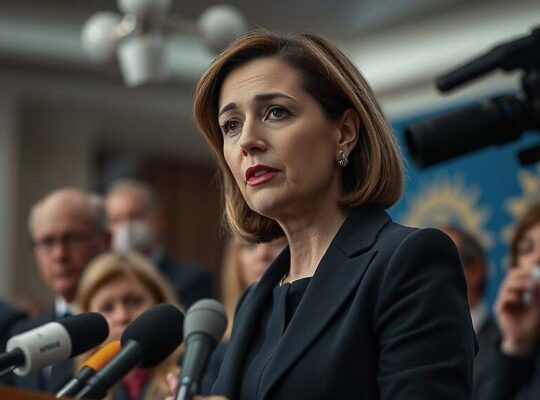
Raed Saleh, the chairman of the Berlin SPD parliamentary group, has sharply criticized the government’s pension plans. Speaking to the news portal T-Online, Saleh argued against the planned cancellation of the penalty-free pension at age 63, stating that it is “alien to life and disrespectful” to treat individuals the same way, regardless of whether they began working at age 16 or much later. He emphasized that the SPD has long campaigned for hard-working people to receive the respect they deserve at the end of their careers. He vowed to continue increasing pressure on the federal government, while stating that SPD Minister President Manuela Schwesig has demonstrated that “we as social democrats do not have to accept everything the federal government imposes on us.”
Saleh also voiced strong opposition to proposed cuts in health and social security. He felt many of these decisions were misguided from a social democratic perspective. For instance, he noted that shifting people previously covered by family insurance onto paying their own contributions could significantly impact their income. Furthermore, he argued that health cuts-citing reductions like those in skin cancer screening-put people’s protection at risk. According to Saleh, the goal of reforms should not be to further burden hard-working citizens.
Simultaneously, he called on his party to exhibit a clearer social democratic profile within the federal government. While acknowledging that SPD ministers are reliable members of the cabinet, Saleh insisted that the SPD must be recognized as an “independent social democratic force” and should not simply endorse the Coalition’s cuts. “If people have to tolerate severe reductions in health, pensions, or housing benefits, and the promised relief for the middle class is eaten away by cuts elsewhere, I will clearly point this out,” he continued. He stressed the need to clearly address issues that were not functioning, adding that he was elected to enforce the interests of the Berliners, “not to please the party leadership.”
In the broader debate over old-age security, the German Social Welfare Association (SoVD) also backs the retention of the Rente mit 63. Michaela Engelmeier, head of SoVD, told the Rheinische Post that the planned abolition of the penalty-free pension after 45 years of contributions must be reviewed. She countered the blanket assertion that only high-salaried men benefit, stating that this view overlooks the life realities of many people, especially in Eastern Germany, where numerous both men and women began working very early and paid contributions for decades. Engelmeier concluded that anyone who reaches 45 years of insured service must have this lifetime contribution recognized without a penalty, and therefore, the federal government should keep the regulation instead of cutting it for budgetary reasons. Previously, Marcel Fratzscher, President of the German Institute for Economic Research (DIW), had labeled the abolition of the Rente mit 63 as indispensable in the Rheinische Post.