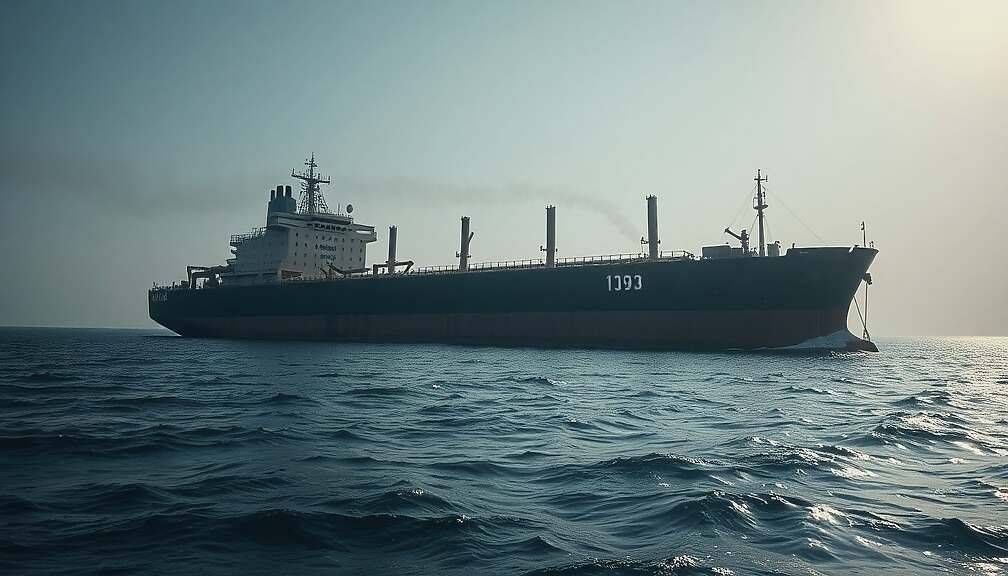
Three Indian seafarers have died following a U.S. military attack on a tanker in the Gulf of Oman, confirming initial reports of missing persons. The incident, which occurred on Wednesday, involved the tanker “MT Settebello,” sailing under the flag of Palau.
India’s Shipping Minister, Sarbananda Sonowal, described the event as “deeply regrettable.” Out of 24 Indian crew members aboard the vessel, 21 were rescued. Sonowal also announced that the bodies of the three deceased men would soon be repatriated to India.
According to the U.S. military, the ship’s crew was fired upon for failing to follow instructions. The U.S. State Department alleged that the “Settebello” was attempting to evade a U.S. blockade by transporting oil from Iran. The U.S. Department of Defense stated that a fighter jet released “precision ammunition” into the tanker’s engine room after the crew repeatedly ignored orders.
The Indian government subsequently called in the Deputy Head of the U.S. representation in New Delhi.
This marks the second incident in several days involving an Indian crew member aboard a targeted vessel. Earlier, on Monday, the U.S. Navy attacked the “Marivex,” another oil tanker flagged to Palau, also for non-compliance with U.S. directives. In that earlier attack, all 24 crew members were rescued by the Omani military.
The U.S. established a maritime blockade following Iran’s effective closure of the Strait of Hormuz. U.S. military sources indicate that since April 13, eight ships have been disabled and 134 others diverted.
The Indian government has demanded an immediate halt to attacks on commercial shipping and civil infrastructure in the region. Manoj Yadav, Secretary General of the Indian sailors’ union FSUI, strongly criticized the U.S., suggesting that military personnel must have known the nationalities onboard the ships. He deemed it questionable that the U.S. forces lacked this information and argued that detaining the vessels would have been a viable alternative to firing upon them.
Meanwhile, tensions between Iran and the United States remain severely heightened. Both sides escalated exchanges of fire for the second consecutive day, putting further strain on the fragile ceasefire agreed upon in April. U.S. President Donald Trump threatened Iran with a “tough” response on Wednesday, criticizing Tehran for delaying the signing of a peace agreement.
The current conflict formally began on February 28 when the U.S. and Israel launched strikes against Iran, resulting in the death of the country’s supreme religious leader. Iran retaliated with attacks on Israel and U.S. allies in the Gulf. The fighting rapidly expanded, with Lebanon also being drawn into the conflict in March.