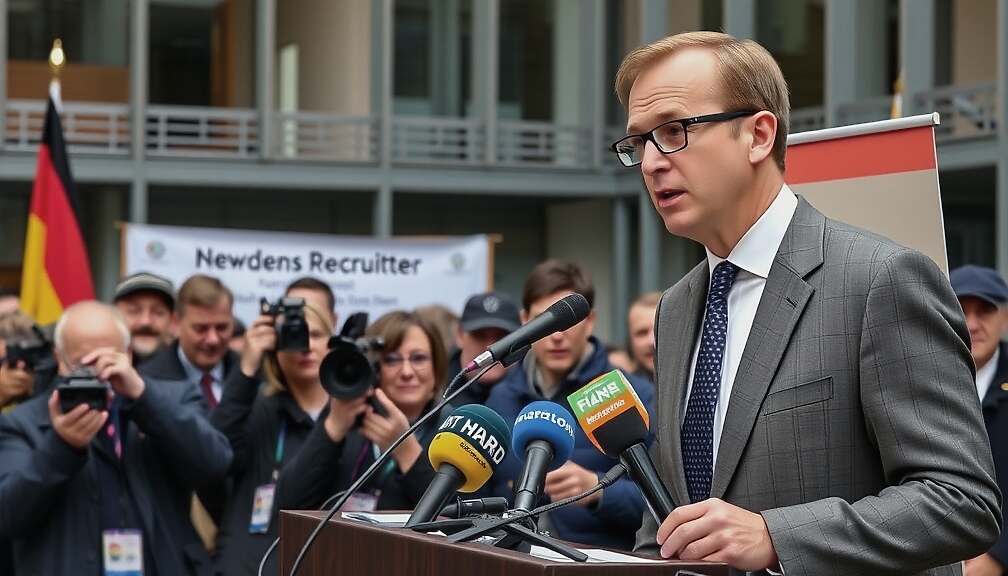
The German Defense Inspectorate, Henning Otte of the CDU, urged the Ministry of Defence to reassess its progress on recruiting volunteers for the new Lithuanian Brigade of the Bundeswehr. “The Ministry must now bring all its forces together, advertise more actively and appeal to voluntarism” he told the German news agency on Tuesday. While the ministry’s goal has been to attract volunteers, Otte stressed that the Bundeswehr must still guarantee the brigade’s readiness as promised, even if that means opening a compulsory‑duty option.
Otte explained that the low number of volunteers so far stems largely from a strategic decision not to present the deployment as a mandatory assignment but rather as a long‑term, potentially permanent stationing. “This created high expectations” he said. The Lithuanian forces are doing everything they can to provide the necessary infrastructure, yet the brigade will need to reach over 5,000 soldiers by 2027. He cited the recent integration of a battlegroup into the brigade as a new challenge. Because of this integration, the overseas deployment allowance disappears; only a service premium remains, which does not benefit lower‑rank personnel who still have to handle their own provisioning. Otte called for a mid‑term review to determine whether the brigade’s attractiveness is high enough to draw volunteers.
During the same briefing, Otte presented his first annual report, a key focus of which is the problem of personnel growth. The report argues that recruiting and retaining staff remains the Bundeswehr’s central challenge, with demographic trends, competition for skilled workers on the job market, persistently high attrition rates and structural deficits all creating bottlenecks. Without a consistent and sustainable personnel strategy, the gap between political ambitions and military reality will widen. The report identifies especially long processing times for personnel paperwork, slow security clearances and poor communication with affected personnel as critical issues.
Otte also called for better equipment. With the Bundestag’s opening of the debt brake for defence spending, the necessary funding for an “operational and war‑ready Bundeswehr” is available. To achieve lasting impact, the government must use the money efficiently. The Inspectorate declared that the blanket claim of “under‑funding the Bundeswehr” is no longer a valid excuse since the last reporting year.