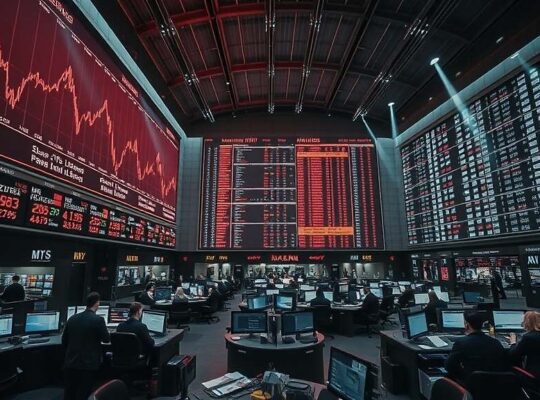
At the close of Xetra trading on Monday, the DAX finished at 23 409 points, a decline of 0.8 percent compared with the previous day. Andreas Lipkow, chief market analyst at CMC Markets, noted that the index had shown “steerability” and had fought back to just above 23 400 points shortly before close. He added that after an eventful weekend and oil prices crossing the $100 threshold, market sentiment seemed to calm somewhat during the day, and that hopes for a swift end to the conflict in the Middle East still dominate investors’ outlook.
Around noon, speculation about a possible cease‑fire circulated, giving European financial markets a brief pause. Nevertheless, the overall news environment remains fragmented and highly stimulus‑driven. Any change in the current situation could easily push the DAX below the 23 000 level again or, conversely, accelerate the ongoing recovery trend.
Term‑market sentiment remained extremely pessimistic, with high levels of hedging activity. These hedges helped cushion broader market declines and contributed to stabilising the DAX. Lipkow cautioned that the long‑term impact on real activity will not be fully reflected yet and will become evident over the coming quarters. Investors now hope that energy prices will ease in the coming trading days; if they stay at current levels, negative effects on economic development are likely.
The German industrial data released today underscore how fragile the current economic situation remains. A larger price shock or extended inflationary pressure could not be absorbed. Economic developments in Europe largely depend on energy prices, while in the United States inflation dynamics and consumer behaviour are also negatively affected by sharply higher crude oil prices. Lipkow remarked that the central banks feel constrained by price rises. They will monitor the inflation and economic environment more closely and use verbal interventions to calm investors.
In the currency market, the euro strengthened in the afternoon: one euro was worth 1.1596 U.S. dollars, and one dollar was worth 0.8624 euros.
Gold was weaker on the day; the price of a fine ounce settled at $5 104, a decline of 0.5 percent, equivalent to €141.52 per gram.
Brent crude rose sharply, with a barrel of North Sea Brent trading at $100.00 at 17:00 Central European time on Monday, up 7.9 percent from the previous day’s close.