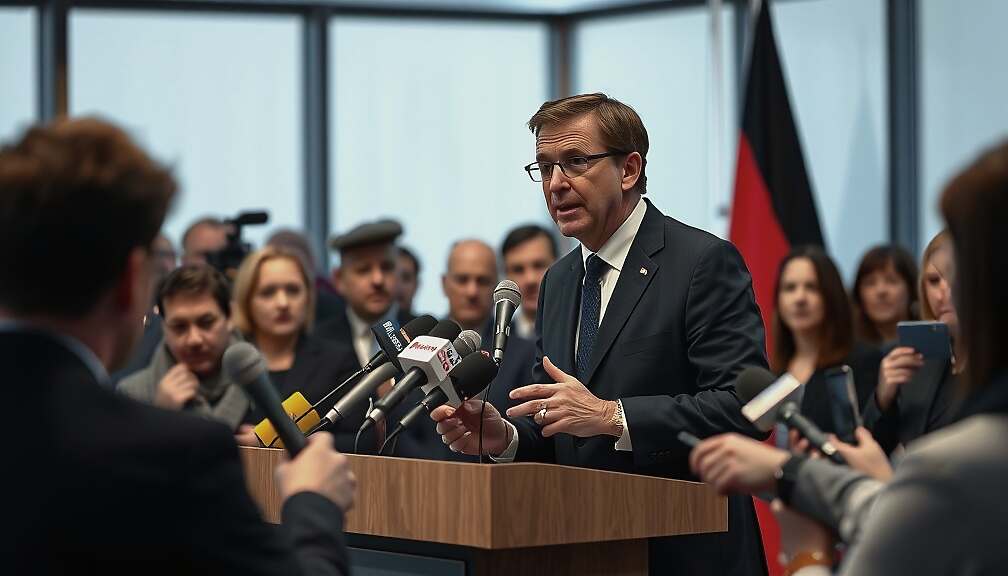
Niedersachsen’s health minister, Andreas Philippi, warns that health‑insurance contributions could reach historically high levels if sickness‑fund expenditures keep rising. He told the news portal Politico that he aims to balance the need to organize medical care with the regulation of steep cost increases, so that the sector does not end up with contributions of 20 % or 22 %. Today, the average contribution stands at 17.5 %.
Philippi also chairs the German states’ Health Minister Conference (GMK). He insists that contributions must remain stable and ultimately fall again. “Anything that helps people see that politicians are taking the challenges seriously and are acting on them is welcomed” he said.
Statutory health insurance, however, expects a deficit of up to €14 billion next year. Federal Health Minister Nina Warken plans to cover the shortfall through savings measures to keep contributions flat. If her strategy fails, insured members would eventually have to pay more.
Hospital spending has risen sharply, largely driven by nursing‑staff costs. In 2020 these costs were separated from case‑payment rates and passed to insurers through the nursing budget. Philippi calls for reforms of this mechanism. “The nursing budget was originally a good idea, but many things have changed since then. We need a new model that targets nursing staff more effectively” he said. He wants to prevent nursing staff from being used mainly for logistics such as bed transport, cleaning and disinfection.
Insurers have previously criticised hospitals for allegedly deploying nursing staff outside their area of expertise to cut staffing costs, noting that nursing salaries are reimbursed via the nursing budget.