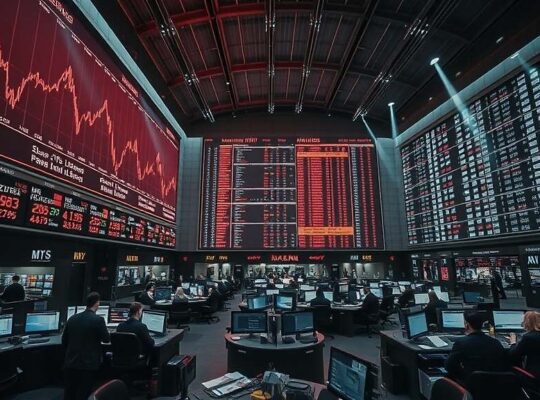
The DAX experienced slight losses as the week got underway. At the close of Xetra trading, the index was calculated at 23,742 points, marking a 0.3 percent decrease compared to the previous trading day.
Shares of Deutsche Telekom were particularly under pressure. The US bank JP Morgan recently lowered its price target for the telecommunications company’s stock, although it maintained its rating at “Overweight”. The bank appeared especially pessimistic regarding the US business segment.
Andreas Lipkow, Chief Market Analyst at CMC Markets, noted that the DAX tracked back towards the previous day’s levels in the afternoon, mirroring the recovery of the Wall Street from pre-market losses. However, the situation in Iran and the Strait of Hormuz remains difficult. Although a ceasefire seems to persist even after the talks failed, this could change rapidly if the US-announced sea blockade leads to armed confrontations. Currently, a mutual probing is taking place to gauge to what extent each side is willing to proceed.
Investors are watching this development while also focusing on the earnings season that began on Monday with Goldman Sachs’ figures. The repercussions of the Middle East war are evident not only in rising crude oil prices and high volatility but also in a reluctance among many companies to invest in financing and acquisitions.
Lipkow added that this caution could at least be read as an additional market risk atop Goldman Sachs’ otherwise positive quarterly results. Following the figures, banks and insurance stocks within the DAX were dragged down with the losers. The financial institutions’ results attract significant attention because they provide good insights into the state of the US economy.
For the DAX, however, the level of energy prices remains a primary factor. The German industry’s high dependency on crude oil exports will leave slowdown effects in corporate balance sheets. In this market environment, the announced industrial strikes at Lufthansa are not received favorably.
Meanwhile, the European common currency strengthened on Monday afternoon. The Euro cost $1.1710, making the dollar available for 0.8540 Euros.
The price of gold weakened, showing a drop of 0.8 percent by the afternoon session, trading at $4,712 per troy ounce, which equates to €129.37 per gram.
In contrast, the price of oil rose sharply. The Brent crude type for the North Sea cost $101.90 on Monday afternoon around 5 pm German time, representing a 7.0 percent increase from the end of the previous trading day.