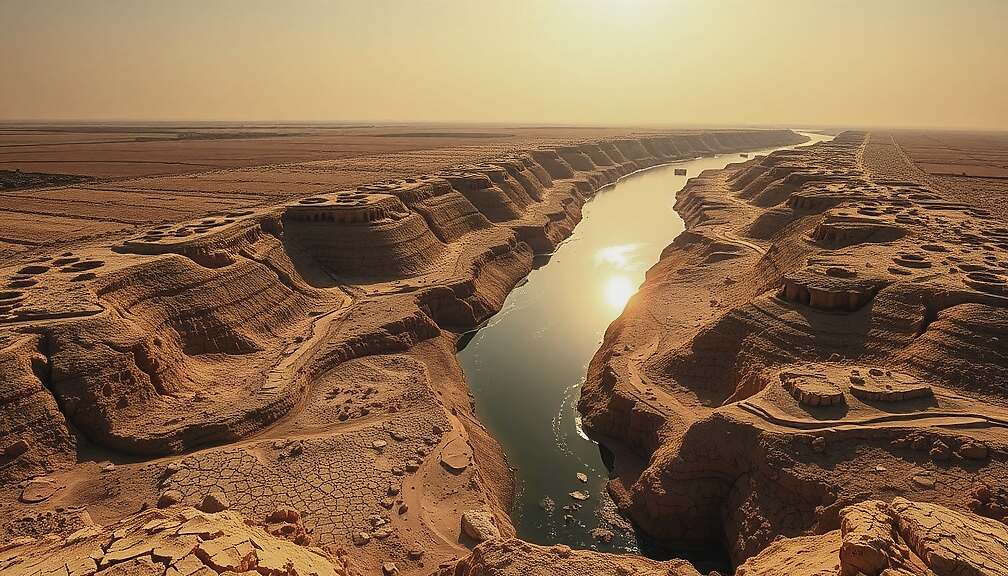
The water crisis in Iran, which has persisted for decades, has reportedly worsened significantly in recent months due to the conflict involving the United States and Israel, according to experts. Before the escalation, three-quarters of the country was already considered arid, with regions receiving only 50 to 100 millimeters of rainfall annually.
Iranian sources have stated that in March, the US bombarded a freshwater desalination plant on Qeshm Island in the Strait of Hormuz, which severely compromised the water supply in that region. Even prior to the current war, the crisis reached a peak at the end of 2025, following five consecutive years of drought. At that time, Tehran’s Amir-Kabir Dam held only 8 percent of its capacity, and 19 major dams across the country were completely dried up.
The nation’s primary water sources-reservoirs, rivers, and groundwater reserves-are nearly depleted, a situation exacerbated by years of poor management, inefficient agricultural practices, excessive construction of dams, and increased groundwater drilling.
Data from the World Resources Institute (WRI) reveals that the country currently consumes more than 80 percent of its renewable water resources in an average year, placing it at an “extremely high” level of water stress. Past water shortages have historically led to unrest in Iran; for instance, protests occurred in the southern province of Khuzestan in 2021, and demonstrations in 2018 accused the government of mismanagement.
Since the 1979 Islamic Revolution, Iran has prioritized self-sufficiency-a goal bolstered by international sanctions. Consequently, the government promotes farming water-intensive crops such as rice and wheat, even in regions where they are naturally unsuitable. This effort is compounded by sanctions that hinder the modernization of the country’s water infrastructure.
The German Helmholtz Centre for Geo-Research (GFZ) has long argued that the water crisis is largely “self-inflicted”. Over recent decades, the area used for agriculture in Iran has expanded by approximately 27,000 square kilometers (a nine percent increase), and cultivation has become more intensive across 48,000 square kilometers of farmland, which represents about a third of the country’s total agricultural use of roughly 300,000 square kilometers.
The current war is expected to intensify this situation further. In addition to the documented shelling of the desalination plant on Qeshm in the spring, reports suggest that water pipelines and other civilian infrastructure have also been hit. Due to media blackouts and internet shutdowns, the full scope of the damage remains difficult to ascertain.