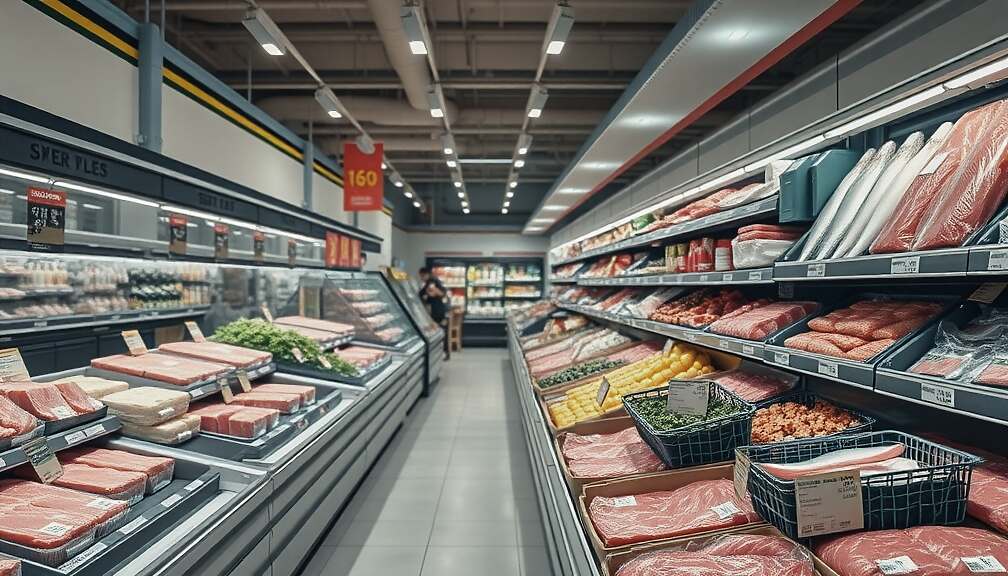
In 2023, households in Germany spent an average of approximately €335 per month on groceries. According to data released by the Federal Statistical Office (Destatis) on Tuesday, expenditures for meat and sausage, as well as fish and seafood, together accounted for around 22% of this total.
Other staple purchases included grain and grain products, such as bread, rice, and pasta, along with dairy products and eggs; this category represented about one-sixth (17%) of the food budget. Vegetables and potatoes made up 14% of spending, while fruits and nuts accounted for 9%. Meanwhile, sugar and sweets consumed an average of 8% of the food expenditures.
Beyond food, households devoted an average of about €75 monthly to beverages. Of this, 55% (roughly €40) went toward non-alcoholic drinks, and 45% (just under €35) was spent on alcoholic beverages. Refreshments and mineral water represented the largest share of drink spending, consuming nearly a quarter (24%) of the total.
The remaining categories included wine and wine-based drinks (both alcoholic and non-alcoholic), which accounted for 20% of beverage spending, as did coffee and tea at 19%. Beer, including non-alcoholic variants, was purchased using 16% of the drink budget.