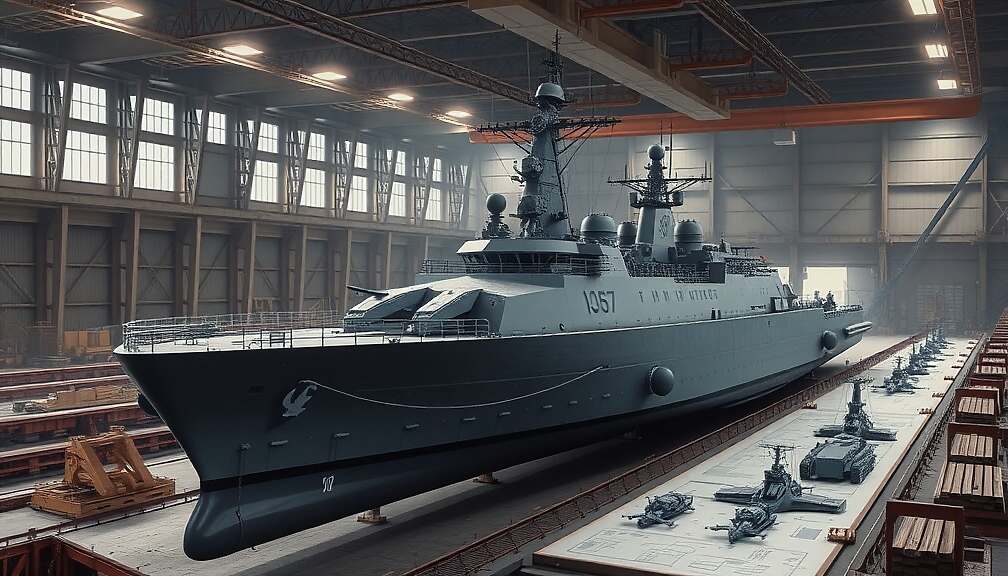
German Defense Minister Boris Pistorius (SPD) is reportedly planning to withdraw from the Navy’s most ambitious arms project in its history. According to “Der Spiegel”, the SPD politician intends to halt the development of the troubled F126-type frigate.
To salvage the problematic project, the Ministry of Defense previously oversaw a change in the prime contractor last year, switching from the Dutch shipyard Damen to the German shipbuilder Lürssen Naval Vessels. Lürssen has since been acquired by the major German defense conglomerate Rheinmetall.
Since the order was placed in June 2020, over two billion euros have been invested in the F126 project. In recent months, the Bundestag Budget Committee approved new tranches of funding primarily to pay subcontractors, including major German shipyards. Parliamentary estimates suggest that the costs incurred so far are approximately 2.3 to 2.4 billion euros.
Instead of continuing the F126, Pistorius reportedly wants to purchase eight Meko-200-type frigates from the German manufacturer TKMS. These warships are significantly smaller than the proposed F126-which was slated to be 166 meters long with a displacement of 10,500 tonnes. The Meko-200 frigates measure 120 meters and displace 4,200 tonnes. Sources within the Navy leadership are reportedly supportive of this shift.
The Budget and Defense Committees of the Bundestag had already approved preliminary contracts and more than 250 million euros to secure manufacturing capacity. While estimates for the export price of Meko frigates were around one billion euros per ship, the final cost to the German Armed Forces is expected to be considerably higher due to the Navy’s demands for superior equipment. Information from “Der Spiegel” suggests the Ministry of Defense anticipates each Meko vessel will cost 1.6 billion euros, potentially slightly less for the second tranche of the eight ships.
Overall, Minister Pistorius’s office estimates the cost of the new construction contract with KNDS to be just under twelve billion euros, plus around 700 million euros for additional services. Conversely, a new construction contract with the Rheinmetall subsidiary, NVL, is estimated to exceed 15 billion euros, plus 1.4 billion euros for supplementary services.