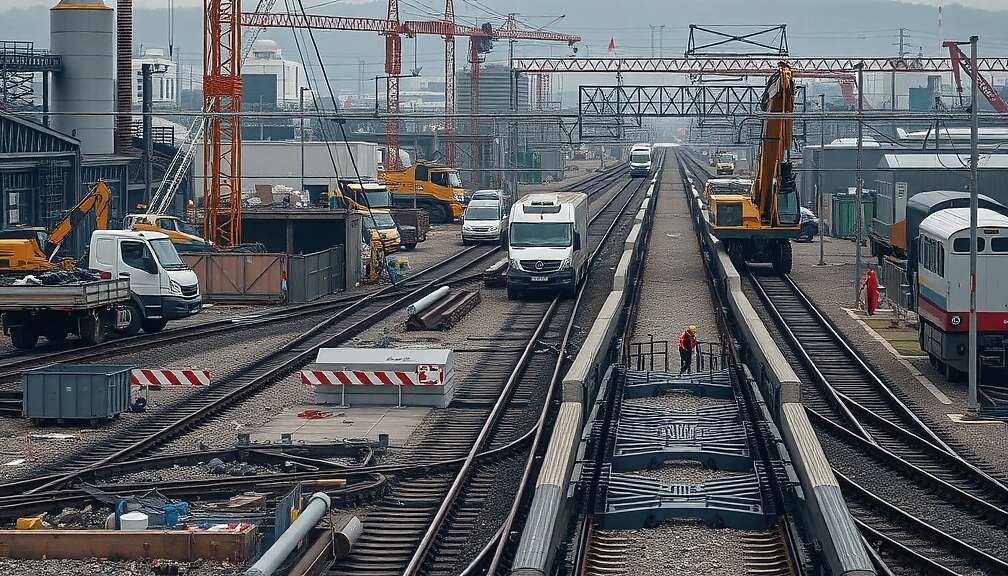
The operational chaos and continuous disruptions within the German rail network represent a massive hurdle for the country’s economy. According to a report by “Welt am Sonntag,” diversions and delays affecting freight trains are causing billions of euros in losses across vital sectors, including steel, chemicals, and automotive manufacturing.
The steel industry is reportedly the hardest-hit sector, as rail transport serves as its central logistical backbone. The industry trade association for steel indicates that nearly 50 percent of the transported volume-covering foundational materials like ore, scrap, and coal, as well as finished steel products-is moved by rail. Consequence of the current situation, major players like Salzgitter announced they have had to scale back blast furnace production. Similarly, Arcelor Mittal noted that the situation at its Eisenhüttenstadt plant has reached a critical point, resulting in iron ore reserves falling far below necessary security levels.
The automotive sector is also experiencing significant challenges with rail transport. A spokesperson from the German Association of the Automotive Industry (VDA) confirmed that the industry has seen a reduction in available rail transport capacity since 2022, prompting a gradual shift of more traffic onto the road network.
Furthermore, the chemical industry, which is one of the rail system’s most important clients, is facing mounting issues. The Chemical Industry Association (VCI) noted that approximately 25 million tonnes of chemical products are moved via trains in Germany every year-including hazardous goods and raw materials necessary for production. However, disruptions are increasingly leading to production halts when raw materials arrive late or when finished goods cannot be offloaded due to limitations in storage space at chemical facilities, all while operating costs continually climb.
Wolfgang Große Entrup, the CEO of the VCI, urgently called on the railway company to implement immediate policy changes, specifically targeting planning, coordination, and prioritization protocols. He stressed that freight transport must be given precedence on diverted routes, noting that while bus replacement services are common and effective for passenger trains, this solution simply is not feasible for transporting cargo.