Brandenburg’s Minister-President, Dietmar Woidke (SPD), is advocating for the division of Germany’s electricity market to ensure that companies in the northern and eastern regions can be supplied with cheaper wind power. Speaking to the “Süddeutsche Zeitung”, Woidke stated that “we have been moving in the wrong direction in Germany for years.”
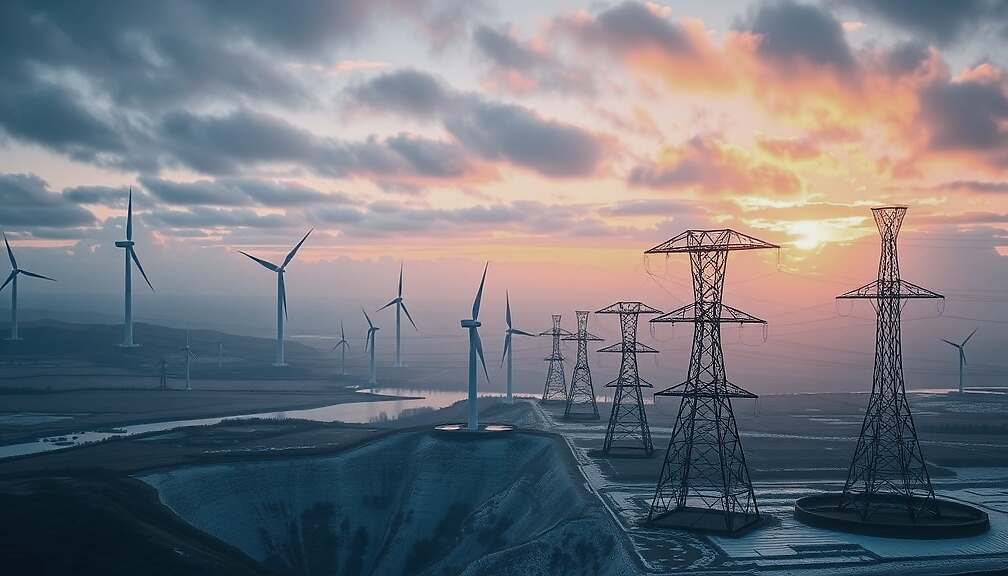
He argues that the current structure, which attempts to convert decentralized, regional energy generation into a centralized power supply, is flawed. Rather than using affordable green electricity where it is generated, the system currently requires extensive power lines-“electricity highways”-to transport cheap wind power from the north to the south. Woidke claims this necessity underscores the need for different price zones across Germany.
Currently, a uniform price applies nationwide, a stance strongly supported by southern German states. This unitary electricity zone is also cemented within the coalition agreement between the CDU/CSU and the SPD. However, Woidke views this policy as a mistake, asserting that the uniform pricing makes electricity in Brandenburg more expensive than it should be, thereby causing the region to lose its competitive advantage.
Furthermore, Woidke argued that decentralized price zones would be beneficial in attracting new businesses to the north rather than having them bypass Germany entirely. He also pointed out that it would prevent companies from leaving the country solely because they could produce goods more affordably in regions with ample renewable energy.
Woidke urged even the CSU, which strongly opposes market division, to recognize this reality. While every party fights for its respective federal state, he emphasized that the CSU, as part of the governing coalition, must prioritize the progress of “all of Germany.” Separately, Daniel Günther, the Minister-President of Schleswig-Holstein (CDU), has also previously advocated for the segmentation of the electricity market.