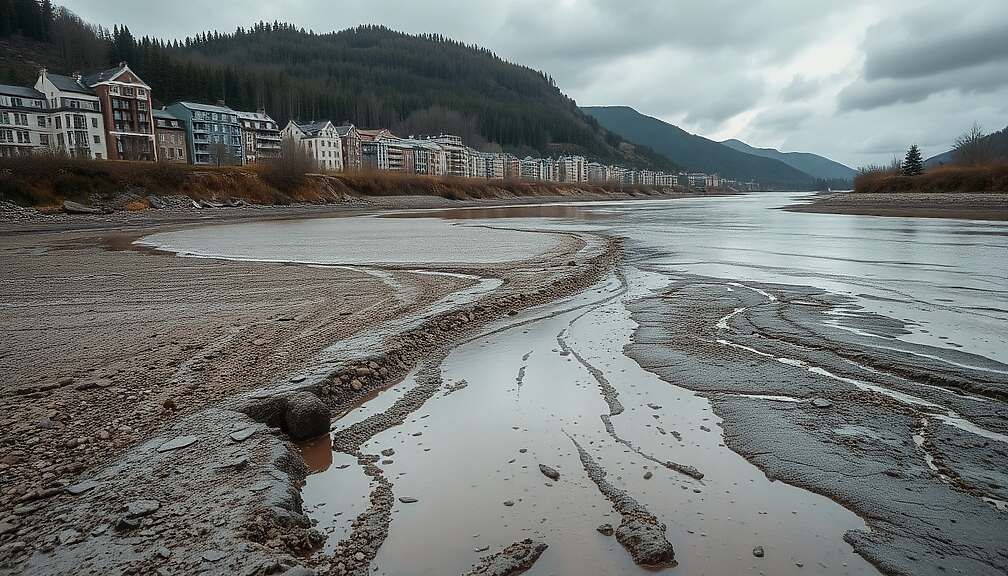
In response to increasingly low water levels, The Left party is calling for an immediate halt to the privatization and sealing of riverside areas. This stance comes from a detailed five-point plan outlined by party leader Luigi Pantisano, as reported by T-Online.
The document, titled “The Water Crisis Makes Life Unaffordable – Our 5-Point Plan for a Safe Water Supply,” details several key demands. Pantisano and his colleagues advocate for creating “sponge landscapes” within river catchment areas. They argue that these landscapes are necessary to reduce the risk of low water by retaining water across the terrain and feeding the groundwater, rather than allowing it to flow away unused. Furthermore, they insist that the privatization and paving over of riverbanks must be stopped to maintain and enhance the landscape’s natural water retention capacity.
The party also proposes establishing a comprehensive water registry to serve as the foundation for a public heat and drought strategy. This register would track who is using how much water from public rivers and for what purpose. Additional demands include a prohibition on privatizing water utilities, strengthening the fundamental principle that public water supply must take priority over industrial use, and securing reliable financing from the federal government for necessary climate adaptation measures. According to the party, local communities must be able to adapt to heavy rainfall, droughts, and heatwaves and protect their citizens without being left solely responsible for the costs.
Pantisano heavily criticized the federal government for what he sees as a lack of decisive action. “Germany is in the midst of a water crisis,” he stated, citing several severe consequences, such as ships unable to sail at full capacity, supply chain disruptions, industries facing a lack of cooling water, and crops withering in fields. These issues, he warned, translate into higher prices for food and other goods, ultimately punishing everyone at the supermarket checkout. He concluded by emphasizing that the burden falls hardest on those who are already struggling to make a living at the end of the month.