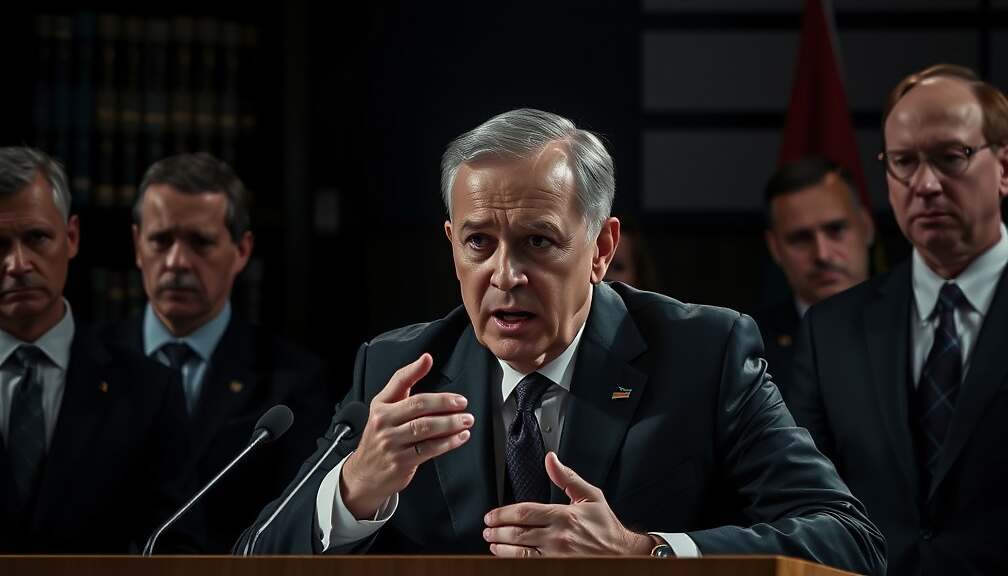
Finnish President Alexander Stubb has rejected German warnings concerning a potential Russian attack on NATO before 2029, and he also argues that a nuclear strike by Russia is improbable. Speaking to the German newspaper “Bild”, Stubb stated that the only way Russia could escalate the war is through mobilization, a development he considers likely.
In response to concerns raised by the German Bundeswehr about Putin’s capacity to target NATO territory by 2029, Stubb replied that while it would be “wonderful” to have proof, he sees neither evidence nor facts to support such a claim. He stated his doubt, saying he “do[es] not believe that Russia would ever want to attack the world’s most powerful military alliance, NATO.” Although he cautioned against complacency, he explained that preparedness is key: “I am not saying: ‘Relax.’ You should always prepare for the worst in order to prevent it.”
According to Stubb, his confidence is based on two factors: intelligence insights and the strength of the deterrence system. He emphasized that this deterrence is robust-relying on conventional forces, missiles, and atomic weapons-and that no global power would find it logical to test the resolve of such an alliance.
The head of state also expressed skepticism regarding the likelihood of a Russian nuclear strike in Ukraine. He mentioned that Chinese Foreign Minister had visited him earlier that summer, and after Stubb raised the topic, the minister stated, “We will never allow that to happen.” Stubb finds this commitment to be a “rather effective deterrent.”
He believes Russia’s options for escalation are currently limited. “The only thing Russia can still escalate with is mobilization.” Stubb views a Russian mobilization in the autumn as a probability, citing the recent laws being introduced-which seem designed to restrict freedom of movement and close borders-as an indication of this trend.
Furthermore, Stubb provided an analysis of Russian military capabilities, noting that the Russian army is losing between 30,000 and 35,000 soldiers each month, while only recruiting about 27,000 new soldiers. He concluded that the army is continually shrinking in an increasingly complex operational environment, making an aggressive move to mobilize forces for a second front highly improbable.