In the first half of 2026, Germany generated and fed 230.6 billion kilowatt-hours (kWh) of electricity into the grid. According to preliminary results released by the Federal Statistical Office (Destatis) on Tuesday, this represents a 4.5 percent increase compared to the first half of 2025 (which recorded 220.7 billion kWh).
The injection of power from renewable sources rose by 6.5 percent compared to the same period last year, reaching 136.4 billion kWh. Consequently, 59.1 percent of the total domestically produced electricity came from renewable sources (up from 58.0 percent in the first half of 2025). Meanwhile, generation from conventional energy sources increased by 1.7 percent to 94.2 billion kWh. However, due to the higher overall power generation, the share of conventional sources in domestic electricity production dipped to 40.9 percent (down from 42.0 percent in the first half of 2025).
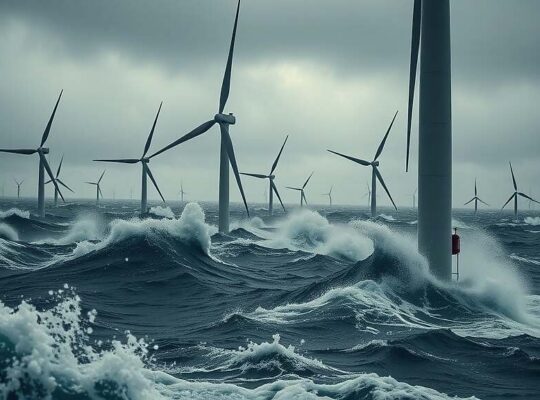
Wind power generation expanded by 12.3 percent in the first half of 2026 compared to the previous year, reaching 67.7 billion kWh. This boosted its share of total domestic power generation to 29.4 percent (up from 27.3 percent in the first half of 2025). Wind power remains the most important energy source for electricity generation in the first half of 2026. While this surge represented a significant year-over-year jump, the average long-term generation of wind power was steady; the major reason for the sharp annual increase was an unusually wind-poor first quarter of 2025.
Solar photovoltaic (PV) production also saw growth in the first half of 2026, increasing by 3.5 percent from 41.0 billion kWh in the first half of 2025. Contributing 17.8 percent of the total electricity supply (down from 18.0 percent in the first half of 2025), PV was again the third most significant source of domestic electricity generation.
Looking at conventional sources, power generated by coal-fired power plants slightly decreased by 0.5 percent compared to the previous year, hitting 49.4 billion kWh, accounting for 21.4 percent of the total generation (down from 22.5 percent in the first half of 2025). Coal thus remains the second most crucial energy carrier in domestic electricity production. In contrast, electricity generation from natural gas rose by 6.4 percent, reaching 38.0 billion kWh. Natural gas accounted for 16.5 percent of power production (up from 16.2 percent in the first half of 2025), maintaining its position as the fourth most important energy source.
Regarding trade, the volume of electricity imported into Germany fell by 8.7 percent in the first half of 2026 compared to the first half of 2025, dropping to 34.5 billion kWh. Conversely, exported electricity increased by 14.9 percent, reaching 33.9 billion kWh. This resulted in the Netherlands importing 0.6 billion kWh more from abroad than it exported. In the first half of 2025, the import surplus had been 8.3 billion kWh.
The decline in the import surplus, combined with the increase in domestic production, meant that the volume of electricity available and demanded in Germany rose slightly by 1.0 percent during the first half of 2026, increasing from 229.0 billion kWh in the first half of 2025 to 231.2 billion kWh.
Over the long term, a distinct shift in domestic electricity generation is evident. Statisticians note that while conventional energy carriers dominated until 2022, more electricity has been generated from renewable sources since 2023. In the first half of 2026, excluding January, renewable energy sources supplied more electricity than conventional sources every month. Compared to the same period in 2018-the first year of data collection-the first half of 2026 saw nearly a quarter more electricity generated and fed into the grid from renewables. Simultaneously, the production from conventional energy sources has significantly decreased. In the first half of 2018, 174.6 billion kWh came from fossil fuels; this figure had almost halved to 94.2 billion kWh in the first half of 2026.