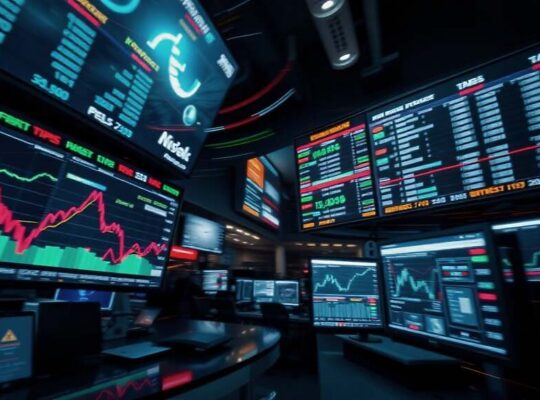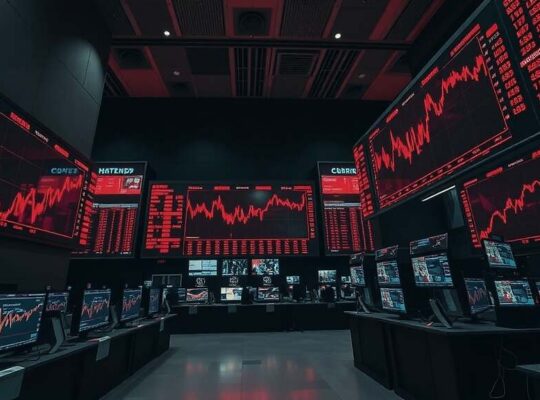
The DAX index saw a significant gain on Tuesday. By the close of trading on Xetra, the index was calculated at 24,402 points, marking a 1.7% increase compared to the previous day’s close. The index built on its morning gains throughout the day, maintaining its elevated level despite fluctuations in the afternoon.
Andreas Lipkow, Chief Market Analyst at CMC Markets, commented that the overall positive corporate news managed to successfully offset the persistent uncertainty in the Middle East. He observed that investors are taking the strong earnings reports from the current reporting season as a support element for the stock market, thereby focusing less on developments related to the USA-Iran conflict.
However, Lipkow noted that a clear picture of the situation in the Middle East remains difficult to establish. While a report that the Maersk container ship passed safely through the Strait of Hormuz provided a minor lift to the DAX today, the conflict is likely to remain uncertain for the next two to three weeks, carrying potential consequences for energy prices. He warned that this increases inflationary expectations and is causing consumer sentiment among private households to deteriorate.
Furthermore, the analyst pointed out that many companies are reducing their workforce and replacing personnel, particularly in the technology sector, with AI. Since these replaced workers are generally highly skilled and command corresponding salaries and purchasing power, Lipkow suggested that the coming quarters are setting the stage for a quasi-perfect stagflation scenario.
Despite these macro risks, investors are currently overlooking the overall bleak picture. Optimism is being driven by the results from US Big Tech companies, as well as firms operating in the financial, defense, and energy sectors. Lipkow cited the S&P 500 as evidence, noting that over 80% of companies that released quarterly figures exceeded expectations. A key question, however, remains whether this positive momentum can continue into the quarters ahead amidst the described overall environment.
Currently, the DAX is heavily reliant on US market cues and the performance of global heavyweights, which can benefit from limited sectors. Lipkow pointed to the quarterly results of Rheinmetall, SAP, and Siemens as examples, clarifying that the index is no longer reflecting the German economy but is instead dictated by major global corporations.
Near the close of trading, Infineon, Siemens, and Commerzbank led the performance list, while FMC posted the weakest shares.
Separately, natural gas prices fell. A megawatt-hour (MWh) of gas for May delivery cost €47, representing a three percent drop from the previous day. If this price level remains stable, it implies a consumer price of at least nine to eleven cents per kilowatt-hour (kWh), including ancillary costs and taxes.
Crude oil prices declined sharply. A barrel of Brent crude oil, priced at noon on Tuesday, cost $110.70-a decrease of 3.3%, or 373 cents, from the previous day’s closing figures.
Finally, the European common currency showed slight strength on Tuesday afternoon. The euro was priced at $1.1705, meaning that a dollar could be acquired for 0.8543 euros.