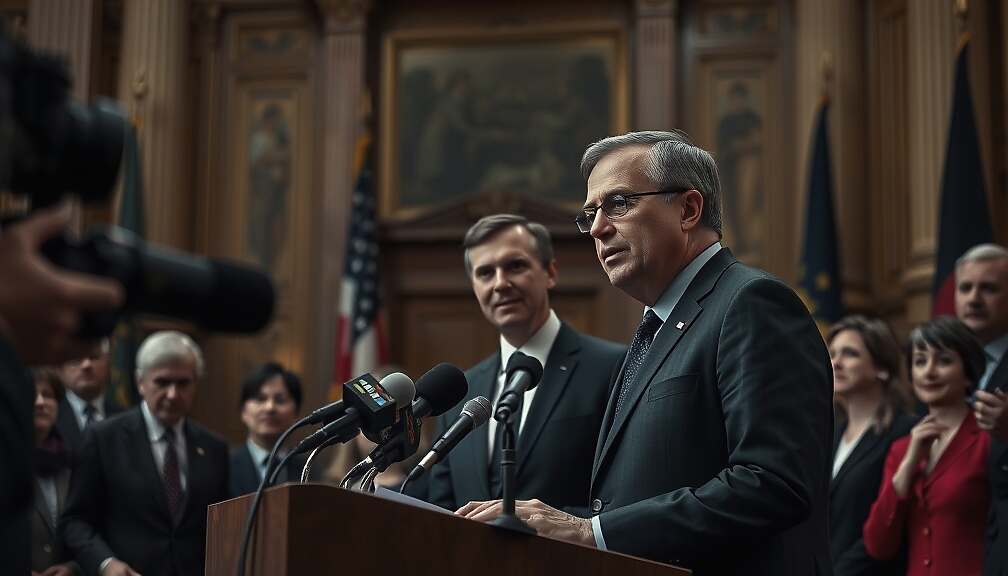
The Minister-President of Saxony-Anhalt, Sven Schulze (CDU), criticized the ongoing debate surrounding the statutory pension system, which was initiated by Federal Minister Friedrich Merz (CDU), describing the debate as focused merely on basic levels of support. Speaking to the TV channel “Welt” on Thursday, Schulze stressed that it is crucial for Berlin to understand the unique situation in eastern Germany. He argued that the residents there are primarily dependent on the state pension system, noting that they did not have the opportunity to save privately or benefit from employer-sponsored pension schemes.
Due to this dependency, Schulze stated there must be extreme consideration when reforming the pensions. He emphasized that for people who may retire in the next ten years, private provision is simply not an option. Therefore, debating the issue in a way that overlooks this reality would be completely wrong. Schulze pledged to oppose any pension plan that he feels is detrimental to his home region. He confirmed that residents of Saxony-Anhalt can count on him to be a strong voice in Berlin and that he will not allow all issues currently being debated to proceed without objection.
Furthermore, Schulze expressed general frustration with the constant reform disputes emanating from Berlin. He insisted that the federal government should move past weekly, drawn-out debates with their pros and cons. Instead, he demanded concrete results and stressed that such matters must be discussed with the state minister-presidents, as the states and the people, including those in Saxony-Anhalt, will eventually be affected. “I do not need a fight in Berlin; that is unhelpful to us” he asserted.
Schulze also used the opportunity to criticize the political sphere’s general pace, urging haste even regarding the new Union plans for an income tax reform. While calling on the SPD to make progress, he directly criticized his own party’s reluctance to act, stating, “We need quick results. If we continue to debate for months and ultimately only reach the smallest common denominator, that does not help Germany”.