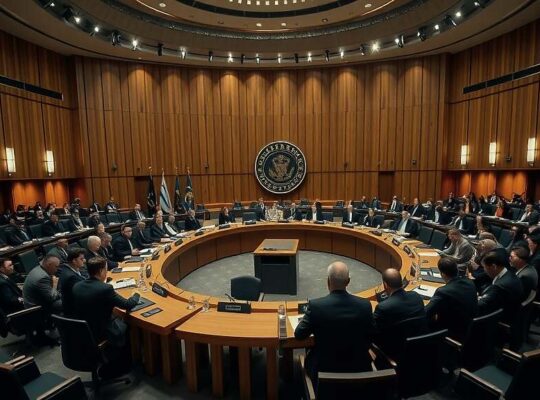
During the meeting of heads of state and government in Brussels, participants outlined several potential “relief” measures for industry. Although the EU Council failed to reach a consensus on the next timeline for the Multi-annual Financial Framework (MFF), they did agree on the direction.
Given high energy prices and growing competition issues, the Commission was urged to extend state aid for particularly affected sectors, examine additional short-term measures against rising energy costs, and reduce reporting obligations for businesses. The Council welcomed the Commission’s proposal to postpone certain duties of the methane regulation, developed a short-term framework to better utilize EU refineries, and encouraged the voluntary pooling of energy demand.
The leaders also resolved to adjust their approach regarding emissions trading. The legislative process for the Market Stability Reserve is intended to be accelerated to curb excessive price fluctuations, although the Council stressed that adherence to a market-based CO2 “price signal” remains crucial.
Regarding the MFF, an agreement was not reached as expected. Council President António Costa is tasked with pushing the negotiations forward, with a conclusion by the end of 2026 deemed necessary for EU funds to flow without interruption starting January 2028. However, participants indicated that substantive progress was minimal; net contributor countries like Germany and the Netherlands are demanding a significantly lower budget than that proposed by the EU Commission.
On the topic of EU enlargement, the Council welcomed the ongoing work on the accession treaty with Montenegro. The Irish Presidency intends to preliminarily finalize the remaining negotiating chapters, provided Montenegro implements the necessary reforms, as stated in the “Conclusions of the European Council” following the first summit day.
The meeting of the European Union heads of state and government is set to continue on Friday in Brussels, with sessions slated to run until the afternoon.