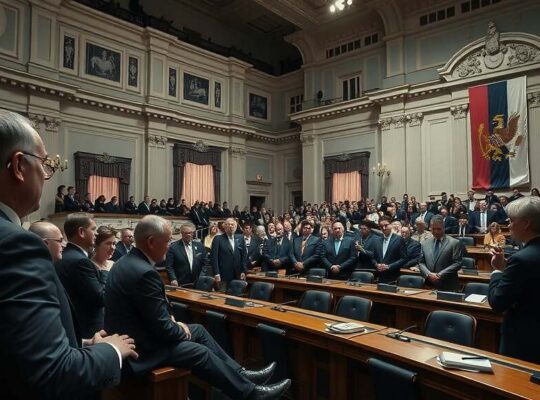
Despite internal opposition within his own party, Thorsten Frei, the head of the CDU parliamentary group, is maintaining the planned sugar tax. Addressing RTL and ntv, Frei stated that the process is standard parliamentary procedure and that the details-how and under what circumstances the levy will be implemented-must be clarified with the coalition factions within Parliament. He confirmed that an agreement had been reached and that the CDU group fully supports this commitment.
Nevertheless, the Union faction is advocating for delaying the tax’s start date. They argue that the levy should not solely serve as a financing tool for the budget, but should primarily function as a health policy measure. According to Frei, this means that beverage manufacturers must be capable of adapting and reformulating their recipes to respond effectively, ideally reducing the sugar content in their drinks. The goal is to resolve all outstanding questions during the cleansing session next Thursday.
Conversely, Frei firmly rejected the possibility of a plastic tax. He asserted that it would not proceed because there has been no cabinet resolution regarding it. He emphasized that this issue is not yet part of the parliamentary process and that there is no existing law to form a basis for it. Furthermore, the current draft submitted by the relevant committee was deemed absolutely unacceptable due to the anticipated bureaucratic burden, making implementation for the following year impossible.
Regarding the planned alcohol tax, Frei supports maintaining the exclusion of sparkling wines. He stressed the need to consider the impact on German winegrowers and, by extension, on the national economy and agriculture. He felt it was prudent not to place additional burdens on winemakers who are already facing difficulties. Overall, he positively assessed the increased alcohol tax, stating that alcohol is not an essential requirement for life. He also noted that the tax had not been adjusted in a long time, and in his view, the overall increase is defensible when looking at consumption volumes.