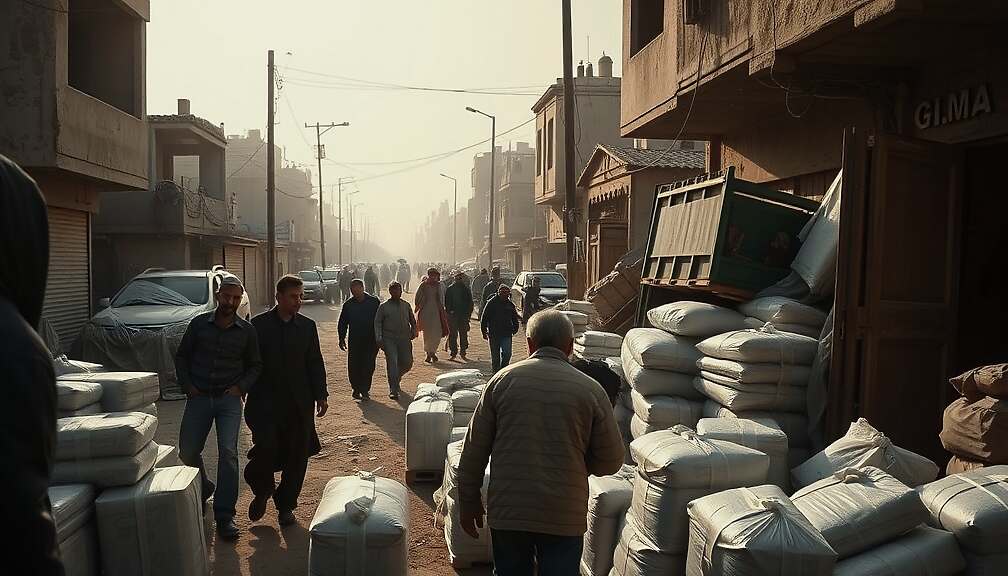
Federal Development Minister Reem Alabali-Radovan (SPD) is demanding increased humanitarian aid for the Gaza Strip, insisting that greater assistance must be provided regardless of how the Israeli government is formed following the parliamentary elections. Stressing that the situation in Gaza remains extremely dire and that the harsh winter is fast approaching, she argued that more avenues must be created for aid organizations there, and that this cannot be delayed pending coalition negotiations. Speaking during her visit to Lebanon for the “Politico” podcast, Alabali-Radovan noted that Prime Minister Benjamin Netanyahu’s government remains in office for the time being. She emphasized that aid must urgently increase before winter sets in, specifying that she did not show a preference for either Netanyahu or Gadi Eisenkot. She concluded that the Israelis themselves will ultimately decide the future Israeli government, and that the Federal Government remains in close dialogue with the Israeli government.
Regarding her visit to Lebanon, Alabali-Radovan stated that it signals Germany’s support for the Lebanese government, which now has a chance to serve as a strong alternative in the south and genuinely dislodge Hezbollah. She described Hezbollah not merely as a terrorist organization, but as a group that exploited the absence of state structures in the region to build its own schools and hospitals. To successfully push Hezbollah out, she argued, the international community must enable the Lebanese government to create its own alternatives-providing formal Lebanese structures, such as schools and hospitals. Germany is supporting this effort through various measures, including combating corruption, building state institutions, and facilitating the return of internally displaced persons, whose numbers have significantly dropped from a temporary peak of one million to 200,000.