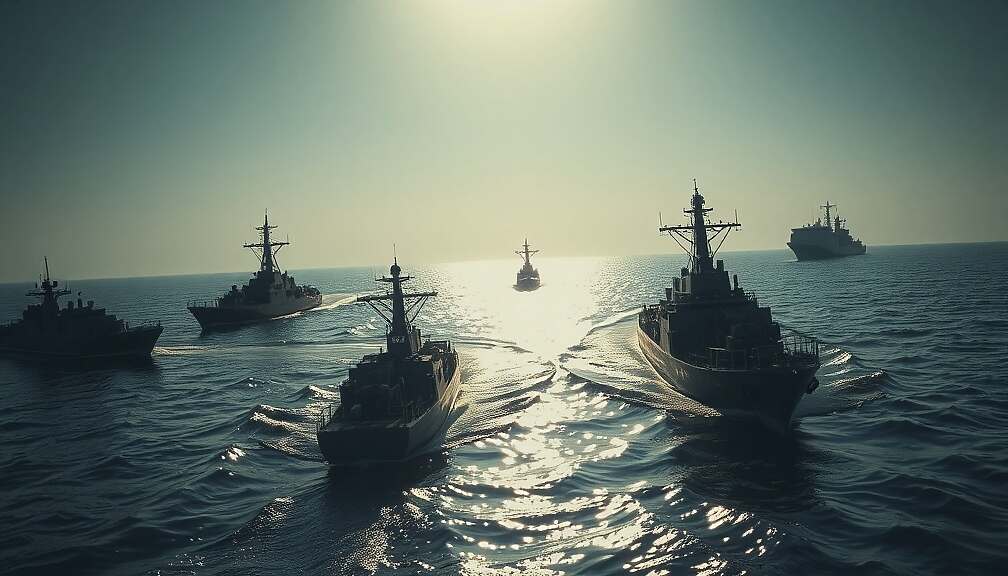
Members of the Bundestag are demanding full clarity regarding the content of the announced agreement between the United States and Iran before authorizing any potential deployment by the Bundeswehr in the Strait of Hormuz.
Thomas Röwekamp, chairman of the Defence Committee (CDU), told Spiegel that parliamentary approval hinges entirely on the details of the agreement. He clarified that while the Navy could contribute to securing the freedom of navigation and protecting civilian shipping after hostilities cease, this assistance would need a basis-either a UN resolution or a European Union mandate. Crucially, Röwekamp emphasized that in addition to an international mandate, a simple majority resolution from the German Bundestag is required. These decisions, he stressed, are determined by the final text of the agreements.
Röwekamp pointed out that the Strait of Hormuz is international waters, guaranteeing its legal status under both the UN Law of the Sea Convention and the Geneva Convention on the Law of the Sea. He expects both the bilateral US-Iran deal and the final arrangement to ensure free passage for commercial ships, noting that charging tolls to transit this strait is contrary to international law. He referenced recent contradictory reports regarding whether Iran might impose passage fees.
Regarding Germany’s capacity, Röwekamp noted that the German Navy possesses numerous capabilities suitable for such a mission, including mine hunting and clearance, air and maritime situational awareness, and extensive leadership experience in international operations. To prepare for a rapid deployment, he mentioned that the mine hunting vessel “Fulda” has already been relocated to the Mediterranean.
Thomas Erndl, the Union faction’s Defence Policy Spokesperson (CSU), stated to Spiegel that he envisions the Bundeswehr participating in an operation in the Strait of Hormuz. However, he pressed for swift action from the federal government to establish clarity on the content of a possible US-Iran agreement and to define the necessary legal parameters required for a Bundestag mandate.
Meanwhile, Siemtje Möller, deputy chairwoman of the SPD faction, expressed hope that the pending agreement might lay the groundwork for a stable ceasefire. She suggested that concrete preparations must now begin for a German contribution. Möller argued that the government needs to establish the prerequisites for an international mandate by collaborating with partners in the EU, NATO, and the United Nations; the ultimate decision on a potential German involvement would then rest with the Bundestag.