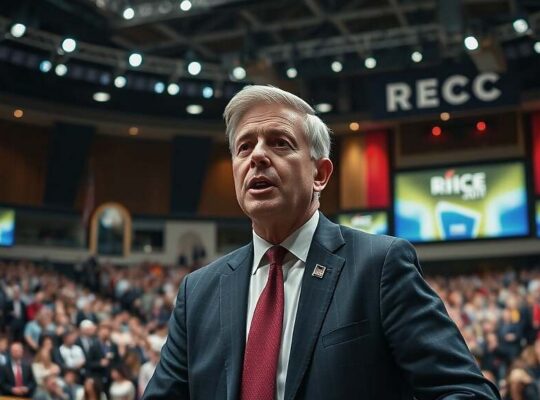
Marc Henrichmann, chairman of the Bundestag’s Parliamentary Control Panel and a CDU member, advocates for a technology-driven offensive to safeguard critical infrastructure. Speaking to the TV channel “Welt” on Wednesday, he stated that besides improving intelligence services, “state of the art” technology is essential for protection against Russia.
Henrichmann questioned how constant, 24/7 security could be maintained over vital infrastructure, suggesting that police, the Bundeswehr, and other entities would be unable to manage the task alone. This demands that society, the state, and the economy must cooperate. He cited advanced technologies-such as sophisticated surveillance cameras and sensor systems, deployable from airports to power grid operators-as being “state of the art.”
Furthermore, Henrichmann argues that Germany must demonstrate a degree of firmness towards Russia. He believes it is “right and important” now to take decisive action, including implementing diplomatically tough measures. While maintaining a willingness to engage in dialogue remains necessary, he stresses the need for confidence, particularly when attacks occur. He stated that facing attacks all day and night is unacceptable. He emphasized that the Russian side must simply issue one word, one sentence, or one conversation committing to ceasing the war and stopping hybrid attacks, rather than continuing to treat Western nations “like little boys and girls.”
In principle, Henrichmann is open to maintaining further sanctions against Russia. He mentioned the ongoing European effort to resolve the visa issue, which targets the leadership elite supporting and driving Russia’s breach of international law and aggressive war. He believes that any limitation placed on these Russian elites would trigger domestic upheaval. He noted that the Russian war of aggression is slowing down, matching the original prognosis that Russia would begin making shifts towards Germany, NATO, and the EU, a trend now observable. However, he insisted that the message must be clear: “We will not be taken for a ride.”