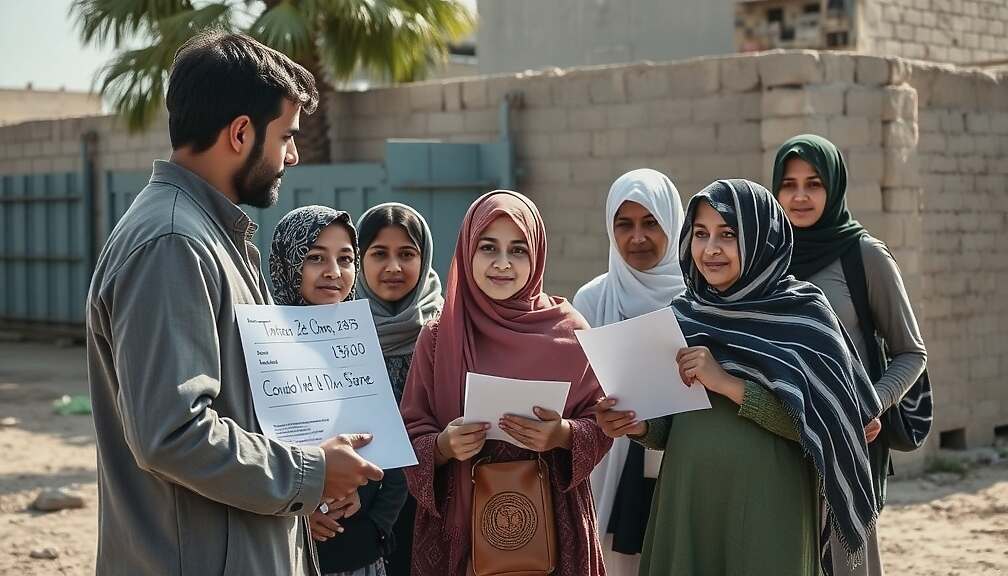
The Federal Ministry of the Interior is currently examining a potential return payment for Syrian refugees, which could amount to 8,000 euros, according to the news magazine Focus. The Union is generally open to higher repatriation bonuses for Syrian refugees.
Günter Krings, the Union’s deputy parliamentary group leader in the Bundestag, told Focus that “voluntary return is the best and most cost-effective solution for all parties”. He affirmed that the discussion regarding increased return payments is justified, adding that any supported voluntary repatriation benefits the taxpayer.
The CDU politician insisted that, in addition to offering incentives, the government must significantly increase deportations to Syria. He stated that the Federal Government needs to address those who are poorly integrated, specifically Syrian refugees who have lived in Germany for years without financially supporting themselves. Krings also found no justification for extending humanitarian residence rights for Sunni men.
Support for enhanced repatriation measures is widespread among various political figures. Siegfried Lorek, State Secretary for Migration in Baden-Württemberg, described return counseling and bonuses as “important instruments” which are cheaper than forced repatriations. He affirmed that his state was generally open to advancing these tools, though he stressed the need to establish regular deportation options for criminals.
Similar views were expressed in Hesse and Bavaria. Roman Poseck, the Interior Minister of Hesse (CDU), suggested that greater return sums were feasible, arguing that even higher payments in the four- or lower five-figure range would often remain a financial benefit for the state when weighed against the long-term costs of social assistance. Joachim Herrmann, the Interior Minister of Bavaria (CSU), echoed this in April, stating that “stronger financial support is necessary-especially for people who do not have sufficient means to secure the initial months after arriving”.
However, Daniela Behrens, the Interior Minister of Lower Saxony (SPD), expressed skepticism. She stated to Focus that whether an 8,000 euro return bonus would actually lead to a significant increase in voluntary returns to their war-torn homes was questionable, though not impossible. Addressing Syrian refugees residing in Germany, she demanded a “constructive overall strategy” from the Federal Ministry. Behrens also voiced disappointment over the slow pace of deportations to Syria, noting that “nothing has happened in this regard since the first individual measures at the end of last year and the beginning of this year”. Simultaneously, she called for pathways for stay for well-integrated Syrians. In a resolution submitted to the Interior Ministers Conference in June, she urged the Federal Ministry of the Interior to provide “legal certainty and a reliable prospect of staying” for these specific individuals.
Currently, Syrian refugees receive an average of 1,000 euros for voluntary return. The existing return payment system is complicated by high administrative overhead, as the exact amount must be calculated individually for each refugee. In contrast, the 8,000 euros currently under review by the Federal Ministry is reported by Focus to be a lump sum. The Ministry has, until now, neither confirmed nor denied these plans.