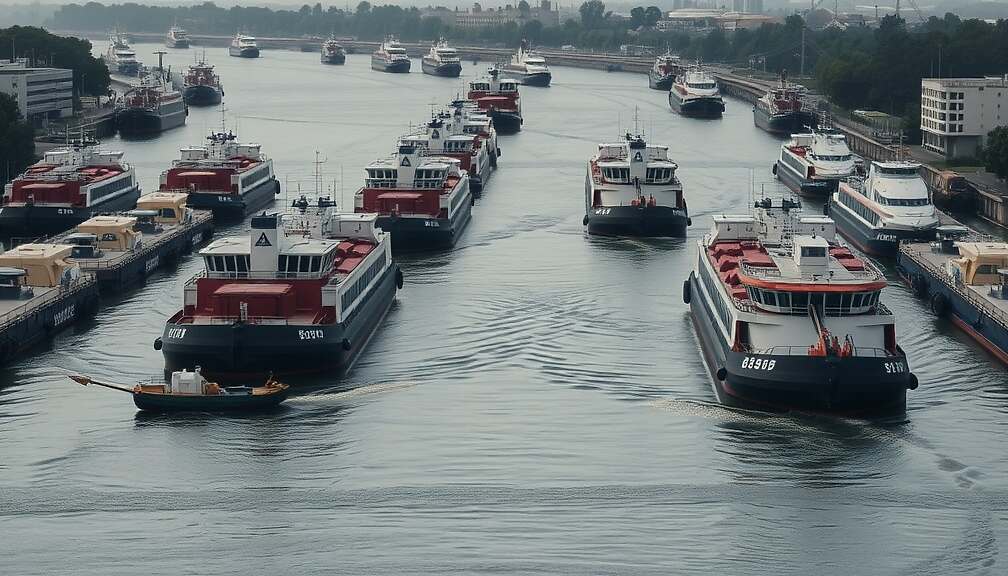
Following recent low water levels, the German government plans to intensify the expansion of its inland waterway network. Christoph Ploß, the government coordinator for maritime economy and tourism, informed the “Rheinische Post” that more funds than initially planned will be allocated to these waterways. Previously, around one billion euros was budgeted for investments, but the utilization of funds from the special infrastructure and climate neutrality reserve now makes 1.2 billion euros available.
Ploß noted that even though recent rainfall has raised the water levels in the Rhine, measures are still needed to improve future preparedness for periods of low water. These measures include adjustments to the navigable channels, such as removing rocks, because these channels form the backbone of German industry.
Increased drought and low water events are becoming more frequent and severe in certain areas due to global warming. Climate change is altering precipitation patterns, resulting in rain falling less often but in greater quantities when it does occur. This effect will only intensify as long as additional greenhouse gases are released into the atmosphere through the combustion of coal, oil, and gas.