The CSU is calling for a fundamental change in the criteria for the second round of power generation capacity auctions. Andreas Lenz, the Union faction’s spokesman for energy policy, told the “Handelsblatt” that the second tender must be delayed until these criteria are amended. Similarly, Michael Kellner, the Green party’s spokesman, demanded that the upcoming auction be halted immediately. Sources close to the matter also reported that Bavarian Minister-President Markus Söder (CSU) has personally intervened in Berlin.
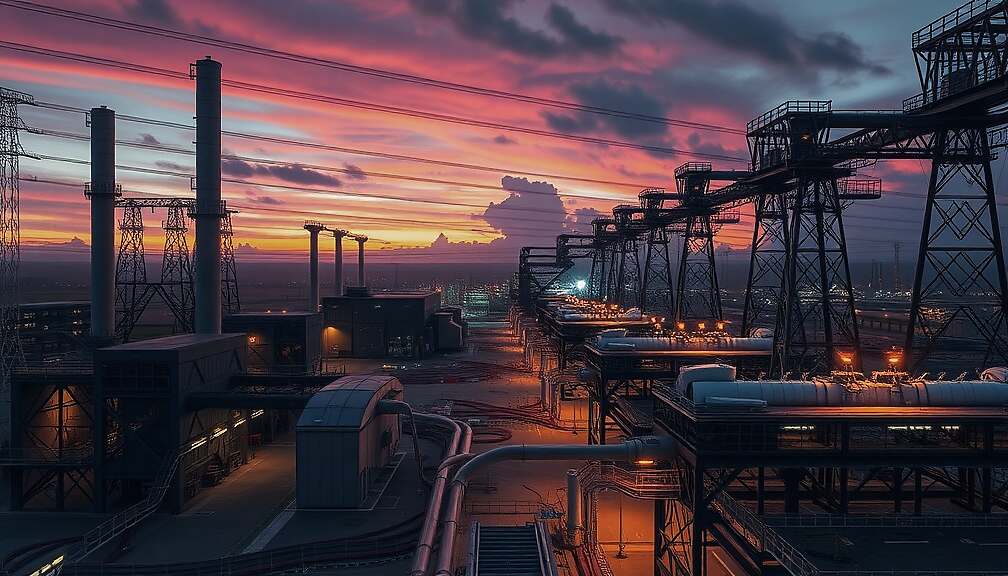
The initial auction results, which saw subsidies predominantly awarded to RWE and Leag, were reportedly disappointing to many major energy corporations, as well as the Federal Ministry for Economic Affairs and the Federal Network Agency. Leag’s plans involve converting existing coal power stations into gas power stations-a process known as fuel-switching-rather than building new gas facilities. These retrofitted plants are typically significantly less efficient and consume more gas than modern facilities, yet the state is likely compelled to provide funding for them.
The “Handelsblatt” reported that policymakers had extensively discussed how to prevent Leag from securing six contracts for these fuel-switch installations. However, an internal legal review conducted by the Federal Network Agency ultimately determined that the bids were permissible. Separately, multiple individuals told the “Handelsblatt” that RWE and Uniper had also considered bidding for old coal plant capacity, but both companies decided against it in the first round.
Auctions for gas-fired power plants, under the framework of the “Power Supply Security and Capacity Act” (StromVKG), were announced on Tuesday. Each of the first two rounds is supporting capacity totaling 4.5 gigawatts. These criteria, which the Ministry of Economic Affairs structured following recommendations from major energy firms, effectively ensured that only gas plants could win the tenders. This approach has been criticized by environmental groups who advocate for storage batteries and other climate-friendly technologies.
Future capacity auctions are planned: in May 2027, an additional 2 GW will be offered, and this round will allow storage solutions to participate. Further capacity tenders are scheduled for December 2027 and October 2029, where existing power plants can compete alongside other flexibility providers. Furthermore, the Ministry of Economic Affairs is currently planning to introduce a comprehensive capacity market beginning in 2032, which would involve issuing further subsidies.
On a broader scale, Germany, along with 194 other nations, legally committed in the 2015 Paris Agreement to keep global warming well below 2 degrees Celsius compared to pre-industrial levels, and ideally limit the rise to 1.5 degrees Celsius. Calculations by the expert council appointed by the Federal Government indicate that Germany has already consumed its equitable share of the global CO2 budget required to maintain the 1.5-degree threshold. The maximum remaining CO2 budget for Germany, accounting for a 1.75-degree temperature limit with a 67% probability, stands at 3.9 gigatons. If emissions were to be linearly reduced to zero, Germany would need to achieve carbon neutrality by 2037 at the latest.