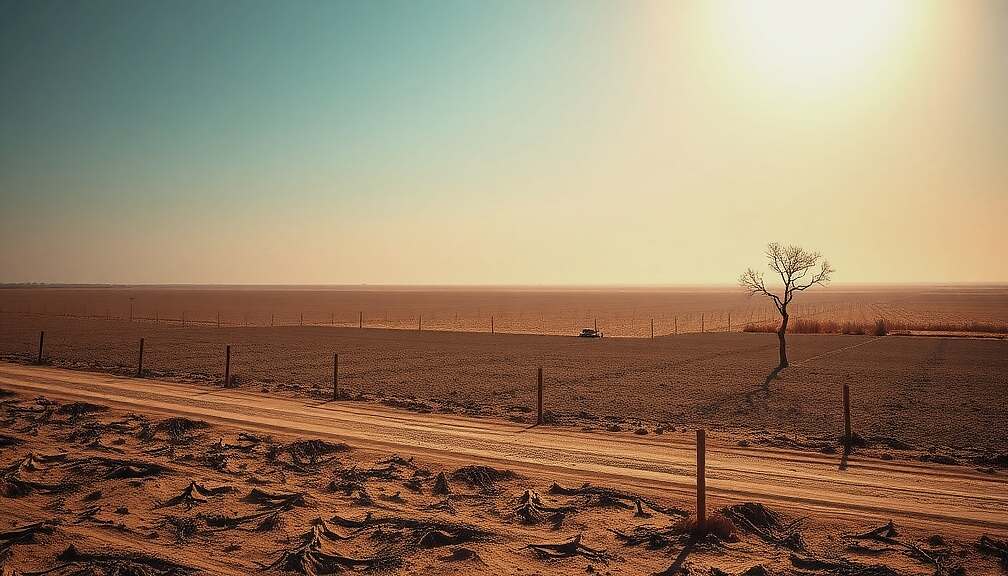
The German Weather Service (DWD) reported on Monday that the summer of 2026 ranked among the warmest recorded in Germany since monitoring began. This season was characterized by historic heat records, widespread drought, and exceptional sunshine.
The average temperature reached 19.6 °C, representing a rise of 3.3 degrees Celsius above the long-term mean. Only the summer of 2003, with an average of 19.7 °C, was warmer. Across Germany, approximately 22 hot days-defined as having at least 30 °C-were recorded, along with about five extremely hot days of 35 °C or higher. A new German record was set on June 27 in Möckern-Drewitz, Saxony-Anhalt, where the temperature hit 41.8 °C. Furthermore, the night of June 27 to 28 was unusually warm; in Kubschütz, Saxony, the temperature did not drop below 29.4 °C, which is the highest nocturnal minimum ever measured in Germany.
Despite the high temperatures, the summer was also significantly dry, recording only about 171 liters per square meter of precipitation, which equates to roughly 72 percent of the expected climate average. July, in particular, was noticeably lacking in rainfall, leading to dried-out soil and record-low water levels in many rivers. While areas at the edge of the Alps received localized rainfall exceeding 400 l/m² over the past three months, some parts of the northern Upper Rhine registered only about 70 l/m². The highest daily rainfall total for the summer occurred in Deisenhofen, in the Munich district, on June 29, reaching 102 l/m². Nevertheless, localized heavy thunderstorms and tornadoes did occur, notably in Fürstenwalde, Brandenburg, and within a corridor stretching from the Rheinland-Pfalz Westerwald to Westthüringen.
In terms of sunlight, the summer of 2026 is expected to be among the five sunniest since the start of the sun observation period in 1951, with an estimated 779 hours of sunshine. This significantly surpasses the climate target for 1961-1990 (614 hours) by about 27 percent, and even exceeds the more recent average for 1991-2020 (654 hours) by roughly 19 percent. Regionally, the sunshine duration was even greater in parts of Southern Germany, where local totals reached approximately 900 hours.