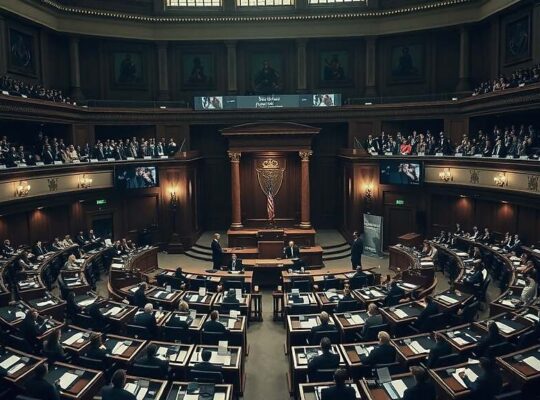
The SPD faction in the Bundestag has rejected a proposal put forth by the CDU regarding reforms to citizenship law. Sebastian Fiedler, the SPD’s spokesperson for domestic policy, told the “Welt” that the party is cooperating excellently with the CDU based on the coalition agreement. He expressed satisfaction that, as part of these agreements, dual citizenship has been legally maintained as a successful model.
This rejection comes after his CDU colleague, Alexander Throm, advocated for extending the naturalization period back to eight years and abolishing the general possibility of holding dual citizenship. A review published by the “Welt am Sonntag” revealed that the number of naturalizations reached a record high in 2025, surpassing 300,000.
Fiedler emphasized the foundational criteria for naturalization, stating that citizenship is only possible for individuals who have maintained a crime-free record, master the German language, can support themselves financially, and pass the naturalization test. He summarized this by saying: “Simply put, only well-integrated people can become German. These figures are good for all of us-good for the labor market, social systems, and our social life”. He also warned that those who attempt to deceive the naturalization process not only risk legal prosecution but may also lose their citizenship and be temporarily excluded from it.
The Greens’ economic policy spokesperson, Sandra Detzer, viewed the high naturalization numbers positively. For her, these statistics signify that many immigrants see a future in Germany and wish to contribute to the success of the community. Detzer argued that anyone familiar with the country’s hospitals, nursing homes, or bakeries knows that these people are indispensable to the nation, contributing to value creation and social cohesion. She added that these well-integrated individuals benefit from simplified naturalization, arguing that increasing immigration is necessary to boost potential growth in Germany, not reducing it.
Clara Bünger, deputy faction leader for the Left Party, also heralded the record high in naturalizations as “welcome news”. She noted that a large portion of the new German citizens are people who arrived in Germany during the 2015 migration summer, such as those from Syria or Afghanistan, and have successfully built new lives here. “They live and work here, they raise their children here, they are part of Germany” Bünger asserted. The Left criticized the CDU’s proposals to tighten naturalization requirements as “an affront to all people who have been part of society for years and contribute to it”.
On the other side, Christian Wirth, the AfD faction’s deputy spokesperson for domestic policy, deemed the naturalization record to be “a direct consequence of years of political missteps”. While acknowledging the abolition of what he called “absurd turbo naturalization” Wirth maintained that the core mistake remains the reduction of the regular naturalization period from eight to five years. He concluded that this demonstrates the CDU is not capable of undertaking a genuine migration policy shift. Wirth argued that routinely accepting multiple nationalities sends the wrong message and creates conflicting loyalties rather than promoting clear belonging. He also sharply criticized the mass naturalization of individuals whose original residence status derived from temporary protection. The AfD faction demands a fundamental reform of nationality law: a return to the minimum residency period of eight years, an end to general dual citizenship, stricter integration and loyalty checks, and a clear separation between asylum protection and naturalization.