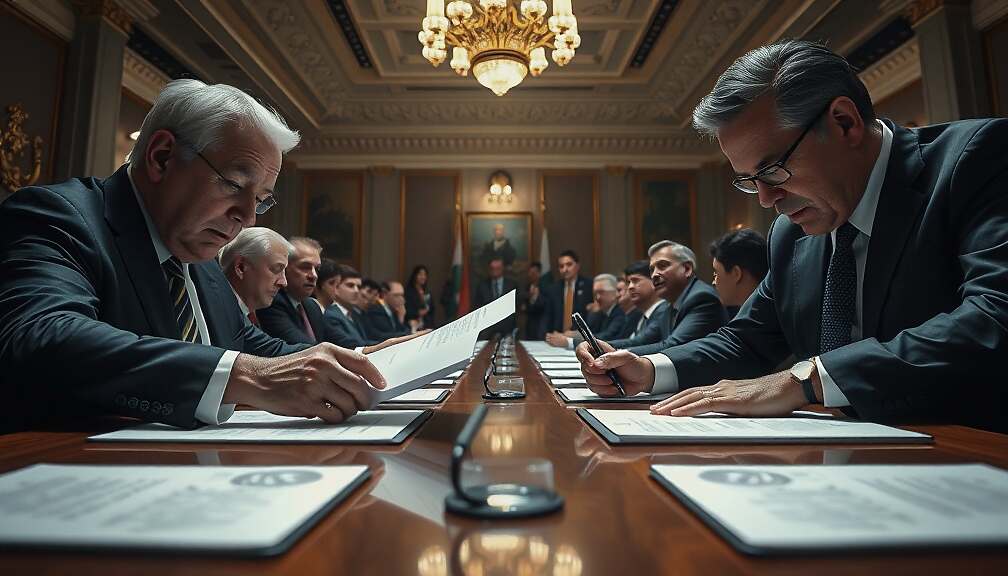
The United States and Saudi Arabia have signed an agreement that is set to enable the Gulf state to develop a civilian nuclear program. The U.S. Energy Department stated that the arrangement is a “peaceful nuclear cooperation agreement,” which will grant American companies access to Saudi Arabia’s atomic energy infrastructure.
Although the full text of the deal has not been made public, U.S. media reports that the agreement could eventually allow Saudi Arabia to enrich uranium. Uranium enrichment has applications in both manufacturing fuel for power plants and producing atomic bombs. U.S. Energy Minister Chris Wright assured the public that there are “guarantees” that Saudi Arabia will not produce nuclear weapons. However, experts warn that the agreement is unprecedented for the U.S. and could heighten the risk of future nuclear proliferation in an already unstable region.
In addition to the cooperation treaty, the two nations also signed a “bilateral security agreement.” These two pacts are intended to establish the legal groundwork for a multi-decade, multi-billion-dollar partnership that drives several economic and strategic priorities, including non-proliferation. The Saudi government explained that the agreement is simply an expansion of the existing collaboration in the energy sector.