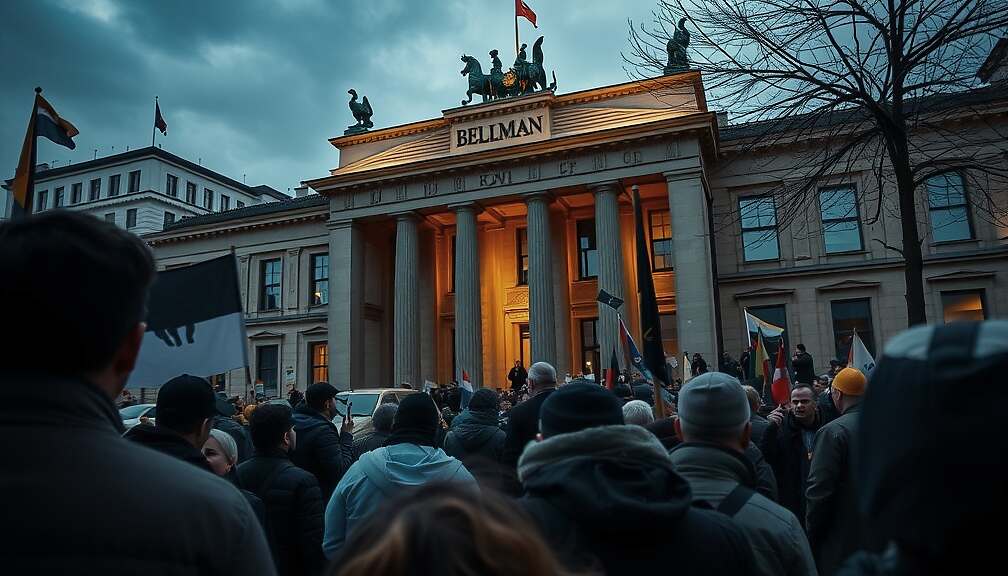
Sahra Wagenknecht, founder of the BSW party, has strongly opposed the German government’s consideration of closing the Russian House in Berlin, a move it is reportedly making in response to the recent drone incident in Leipzig. Speaking to the Funke Media Group, Wagenknecht questioned the effectiveness of the sanctions already implemented, asking, “What have the sanctions that have been imposed so far achieved? Are they now planning to tear down the last bridges of exchange and understanding?” She emphasized that during current times of conflict and high tension, dialog is absolutely necessary. Wagenknecht stressed that Russia is, and remains, Europe’s largest neighbor-a country that once facilitated German reunification-and that peace must be maintained with it.
Wagenknecht also expressed doubt regarding whether Russia can even be held responsible for the failed explosives attack using a drone at the Leipzig airport. According to her comments to the Funke newspapers, “When Russia sends drones, they don’t just look much more threatening than the toy drone from Leipzig; they cause much greater damage.” She pointed to recent instances where UK drones have been used to strike targets deep inside Russia, noting that Russia is currently being attacked using German technology and German money. From the Russian perspective, NATO has already waged war against the country, and warnings about responding to this escalation with Russian military strikes against NATO targets are growing louder. If this dangerous escalation is not halted, she warns, Europe will soon descend into a major conflict, primarily fought on German soil.
When asked why she was not directing her appeal to Vladimir Putin, Wagenknecht clarified that her call was aimed at all sides. However, she maintained that the Russians will not end the war as long as they have not achieved their primary objective: preventing the stationing of NATO military forces and missiles on their border. Furthermore, she criticized Chancellor Friedrich Merz (CDU), arguing that his desire to make Germany the greatest military power in Europe while simultaneously tolerating the risk of a war with an atomic power represents a clear breach of the Basic Law’s peace mandate-a stance she described as “constitutional-enemy” and “extremist.”
In the background, the federal government is currently operating under the assumption that Russia is behind the Leipzig attack and is reportedly reviewing the closure of the Russian House. The fact that the institution has continued to operate without hindrance for such a length of time has been a long-standing point of criticism.