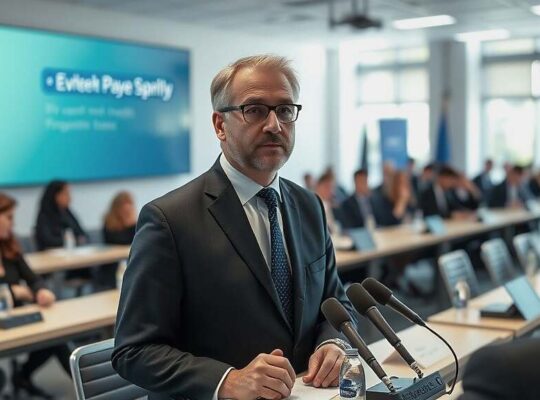
Monika Schnitzer, the head of the Wirtschaftsweisen, has voiced concerns regarding the fuel price assistance measures currently being discussed by the federal government. She warned the “Rheinische Post” that implementing further fuel discounts or blanket price caps would be economically unsound. According to Schnitzer, such measures would weaken the crucial signal sent by high oil prices regarding scarcity and would incur significant costs for the state.
Furthermore, she expressed skepticism about a “windfall tax.” Schnitzer noted that defining excess profits cleanly is extremely difficult, and poorly designed taxation could negatively impact investment incentives. Given that the geopolitical situation has worsened again in recent days, the volatility and shortage in the oil market are expected to remain high, meaning none of the currently proposed actions address this fundamental issue.
The Munich-based economist is also highly critical of reducing the value-added tax (VAT). While the idea of giving back revenue generated from additional VAT intake might be fiscally less problematic than a direct fuel subsidy, she stressed that this should not mask the reality that the state is not fundamentally benefiting from high energy prices.
Schnitzer emphasized that the country is in a crisis whose economic burdens cannot be entirely subsidized away. Therefore, she argued that the priority must be twofold: dealing with the higher prices in the short term, while simultaneously working toward structural independence from oil and gas imports and geopolitical risks. She pointed out that looking at neighboring countries shows that widespread relief measures are not the norm, noting that some nations, like Poland, are already allowing their temporary measures to expire.