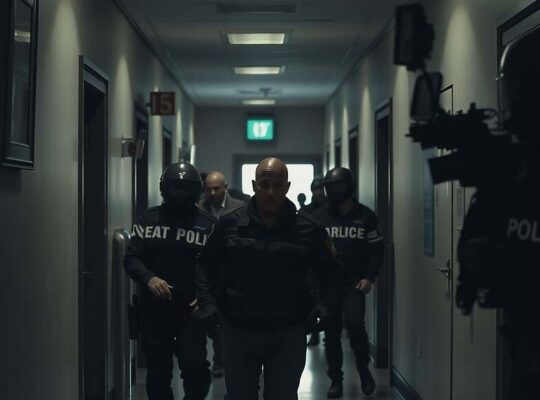
Following the detention of former BND chief August Hanning, Marcel Henrichmann, chairman of the Parliamentary Control Panel (PKGr), is calling for strong consequences regarding how the country handles former high-ranking intelligence officials. Speaking to RTL and ntv, the CDU politician stated that the debate about the loyalty owed to the state one has served must be fundamentally re-examined. Should the allegations prove true, he insists that there must be a “brutally tough” response. “Something like this cannot go unpunished, serving both as a signal to potential imitators and to those who plan similar actions,” he emphasized.
However, Henrichmann cautioned against reacting politically just yet. He views the current calls for an investigative committee as merely a parliamentary reflex. He stressed that the priority must first be to determine what actually happened and whether such a case could even recur following the reforms implemented in security protection and vetting procedures. Only if recurrence is possible, he argues, should parliamentary action be considered.
Currently, Henrichmann does not perceive immediate security threats to Germany. In his assessment, the information found during the searches does not possess a quality that would fundamentally shake Germany’s foundations. Nevertheless, he noted that an ex-service chief being involved in such a scandal is “a dimension in itself.”
Roderich Kiesewetter, a CDU foreign policy spokesperson, has also demanded a more critical approach to retired senior civil servants of security agencies. Kiesewetter told RTL and ntv that departing top officials should simply avoid certain domains and should not attempt to monetize their knowledge. He pointed out that the Parliamentary Control Panel had already addressed the issue in 2023, referring to instances of retired officials moving into consulting networks and earning money through their contacts. He maintained that the Panel’s criticism at that time was entirely justified.
In the Hanning case, he sees this exact problem manifesting. One outcome, he noted, is that this top representative of the service clearly used his contacts for political benefit for over two decades. Kiesewetter warned that retiring top officials could quickly find themselves in precarious situations, rapidly heading down a problematic path, as has been observed in this case.