The Green Party leadership is intensifying its climate strategy. According to reporting by the “Süddeutsche Zeitung”, the party plans to vote on proposals for additional heat adaptation measures during a session in Berlin later this week.
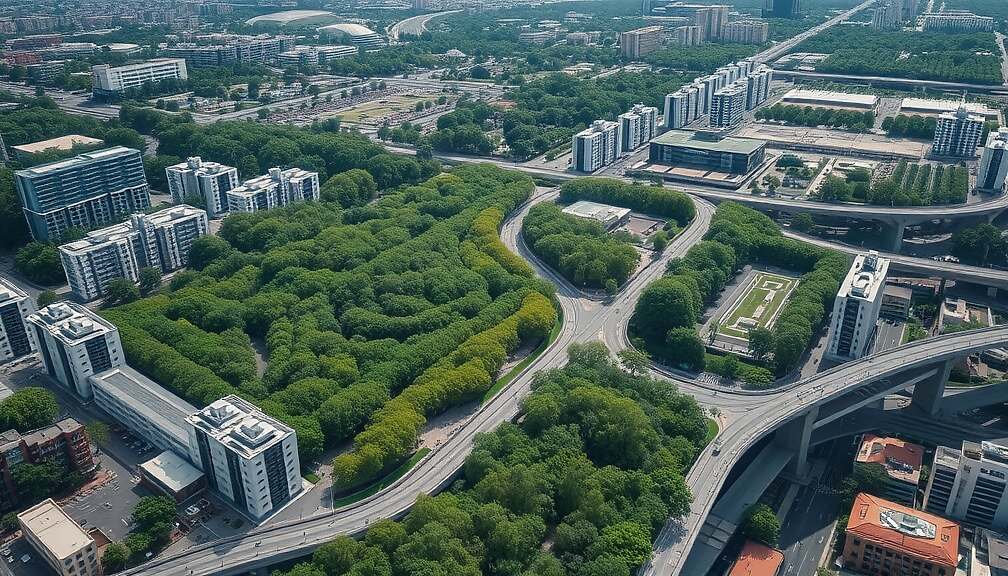
A central focus of the party’s initiative is boosting urban green spaces. The draft resolution commits to funding the replanting of at least one million additional street trees in cities and municipalities by 2030 using federal funds. Party leader Felix Banaszak contends that the ethos of “green instead of gray” must become the guiding principle for German urban and local development. He notes that each additional tree provides shade, stores water, improves air quality, and lowers temperatures.
The plan also introduces new legislation regarding trees. The paper mandates that during any construction site-whether for new water pipes, road surfaces, or tram lines-the immediate planting of new trees must be assessed. In Berlin, where the Greens aim to be governing partners following the state election at the end of September, the number of required compensatory plantings will be doubled. Furthermore, the Greens propose adopting a national 3-30-300 principle in all municipalities. This formula aims to ensure that every dwelling has at least three visible large trees, that every neighborhood and village achieves a tree canopy coverage of at least 30 percent, and that no house is more than 300 meters away from a public green area or park.
The strategy also includes short-term measures to combat future heatwaves. Initially, public cooling spots-such as museums, air-conditioned libraries, public pools, and other cool facilities-will be opened free of charge on particularly hot days exceeding 35 degrees Celsius. Through a federal program, the Green Party also intends to promote the modernization of public institutions that are susceptible to heat, equipping them with climate-friendly cooling systems, such as nursing homes and hospitals.
The party takes a sharp public stance in the document, heavily criticizing Federal Chancellor Friedrich Merz (CDU) and the CDU-Greens coalition. The proposal states that the Chancellor and his government’s response to climate-related heat extremes constitutes “a complete failure.” The party asserts that while the worst forecast scenarios are unfolding, governments across Europe are responding with immediate action, noting that in Germany, “brashness, denial of reality, and ignorance” are governing.